MEGA BIRD NEWS:13th August 2026-Yellow-throated Warbler-Lancashire-Liverpool-One photographed in inaccessible area of docks-Black-winged Kite-Norfolk-Hempstead Marshes-Zitting Cisticola-Suffolk-Walberswick-Long-tailed Shrike-Gloucestershire-Eastleach Martin-Hudsonian Godwit-Suffolk-Cattawade-

Thursday, September 12, 2024

AN EMERALD IN THE RAIN

The walk had begun without expectation — a gentle morning stroll through the countryside near where I was staying with friends. Grey clouds hung low, but there was no urgency in my steps until, without warning, the heavens opened. Rain fell hard and suddenly, prompting me to search for shelter.

I ducked beneath the nearest tree and resigned myself to waiting it out. A wooden post stood beside me; I rested my can on top, lit a cigarette, and opened a drink — a clear sign I wasn’t going anywhere soon.

Then I looked down.

Perched calmly on the post, just inches away, was a male Southern Emerald Damselfly.

For a moment, I simply stared. Then instinct took over. I grabbed my phone and managed to capture a short video and a handful of photographs before the spell was broken. The damselfly remained obligingly still, its presence utterly surreal given the conditions — rain-slicked countryside, muted light, and the quiet hiss of falling water.

                            
Southern Emerald Damselfly

The identification was unmistakable. The black-and-white pterostigma, the bronzy tones of the thorax, and the distinctive spread-wing posture left no doubt. Known in some regions as the Migrant Spreadwing, this species carries itself differently from our more familiar damselflies, resting with wings half-open rather than neatly folded.

What struck me most was the absence of blue colouring — instead, the broad, pale antehumeral bands on the thorax and the two-toned wing spots marked it out as something exceptional. To encounter such a species, unplanned and at such close quarters, was genuinely astonishing.

The significance of the moment soon sank in. This was a true rarity, encountered in the heart of Norfolk — the Emerald of the South, far from where one might typically expect it.


A Species on the Move

Lestes barbarus is a southern European species, its range forming a broad arc from India and Mongolia across to Spain, France, Italy, and Greece. In northern Europe, it remains scarce, though its footprint is steadily expanding. Breeding populations are now established in the coastal dunes of the Netherlands, and since 1995, the species has been reproducing on the Channel Islands, right at the edge of its known range.

North Africa also features prominently in its story — the species’ Latin name derives from Barbary, where the first specimen was recorded.

In Britain, the Southern Emerald Damselfly was first recorded on 30 July 2002, at Winterton Dunes in Norfolk — making this encounter all the more fitting.

As the rain finally eased, I became aware of the wider landscape around me. A narrow stream cut through the field, and nearby a small reedbed stood quietly, glistening with rain. The habitat suddenly felt promising. Was this lone male simply a passing migrant, or were there others nearby, hidden among the reeds?

I didn’t have time to find out. The rain returned with renewed intent, and my friend arrived to collect me before I could explore further. Still, the thought lingered as we drove away.

I hope to return to the site before the week is out — to see whether that emerald flash in the rain was a singular moment, or the hint of something more.


Wednesday, September 11, 2024

FIVE SEABIRDS ADDED TO UK RED LIST

Five seabirds have been added to the UK Red list, meaning that they now face a high risk of extinction in Britain. CLICK ON LINK

Sunday, September 08, 2024

AUTUMN AT LAST!

Following reports of an Icterine Warbler, I made a brief stop at Wells Wood on Sunday while travelling north to Norfolk. After parking, I headed straight to the reported area, where I met James Hanlon, who had already seen the bird and was able to point me in the right direction.

Well's Wood

The warbler soon appeared, actively foraging high in the treetops among a lively flock of Long-tailed Tits. It was a pleasure to see the bird so well, particularly as I had not encountered an Icterine Warbler since 2022 in Shetland. In the warm Norfolk afternoon light, it showed superbly, with classic structure and clean plumage.


(C) J Hanlon
Icterine Warbler

Despite an encouraging initial view, the bird proved increasingly elusive thereafter, likely influenced by the cloudier conditions that followed. Nonetheless, the area continued to produce interest, with two Spotted Flycatchers and a Wood Warbler also recorded nearby.

Wood Warbler

Spotted Flycatcher

An excellent afternoon’s birding and a fitting reminder that autumn migration is now well underway.


Tuesday, September 03, 2024

PURPLE HERON-GIFFORDS FLOOD-SHELLY-SUFFOLK

I made a brief visit today, having seen only four Purple Herons in Britain, and was fortunate to connect with the bird almost immediately on arrival.

Despite only four records in the last twenty years, none have been truly twitchable, most departing quickly after discovery. This individual proved far more accommodating, lingering long enough to allow excellent views and performing admirably throughout my visit.

Given the species’ increasing frequency elsewhere, a Purple Heron has long felt overdue in Cheshire and Wirral, making this a particularly satisfying record to catch up with.

Tuesday, August 27, 2024

OUSE FEN RSPB RESERVE-BLACK WINGED STILT

An afternoon visit to Ouse Fen RSPB in Cambridgeshire offered the promise of something special. With reports circulating of a Black-winged Stilt on site, Owen and I decided to call in and try our luck.

The reserve itself was familiar territory. We had visited back in May to connect with a Great Reed Warbler, so we already had a good sense of the layout — and more importantly, where to focus our attention. Cell 10 was the obvious starting point.


It didn’t take long. There, feeding at the back of the cell, was the Black-winged Stilt. Elegant and unmistakable, it immediately drew the eye — impossibly long pink legs, crisp black-and-white plumage, and a buoyant feeding action that gave it an almost weightless quality.

The bird showed well throughout our watch, though it was rarely still, constantly moving across the shallow water. The drama peaked when a Marsh Harrier swept low over the marsh. Instantly alert, the stilt took flight, circling briefly before disappearing to the far side of the marsh, leaving us with a final impression of long legs trailing behind graceful wings.

Cell 10 was lively beyond the stilt alone. A supporting cast of quality waders and wetland birds added depth to the afternoon: Wood Sandpiper, Greenshank, and Ringed Plover fed along the margins, while a stately Great White Egret and an equally impressive Eurasian Spoonbill moved through the shallows.


Greenshank

Great White Egret

As the light softened and activity ebbed and flowed, it was hard not to reflect on just how valuable sites like Ouse Fen are becoming. The reserve already feels rich with potential, and it’s exciting to think what the future may hold as the RSPB continues to shape and protect this landscape.

A great afternoon’s birding — and a reminder that even a short visit can deliver moments of real quality.


Wildlife 'bouncing back' after reedbed fire-Neston Reedbed

More than two years after a fire destroyed part of Neston Reedbed in Cheshire, wildlife is "bouncing back", according to the RSPB........CLICK ON LINK

Sunday, August 25, 2024

BLUES,SKIPPERS AND RED KITES

An afternoon visit to Aston Rowant in Oxfordshire promised colour, movement and history in equal measure. Joined by Jenna, our aim was simple: to find two butterflies still missing from the list — Adonis Blue and Silver-spotted Skipper. Few places are better suited to that quest than this classic chalk downland.

Aston Rowant is also steeped in conservation success. The site played a central role in the Red Kite reintroduction programme, a landmark project led by the RSPB and the Nature Conservancy Council. Once common across Britain, Red Kites were relentlessly persecuted and had disappeared from England and Scotland by the end of the 20th century, largely due to the mistaken belief that they killed lambs and game birds. In reality, kites are primarily scavengers, rarely capable of killing anything larger than a young rabbit.

Using birds from Spain, reintroductions began here in 1989, with the first successful breeding recorded in 1991. The results have been extraordinary: today, hundreds of pairs breed across the country, with birds from this population helping to repopulate suitable areas throughout England and Scotland.

From the car park, we descended through a shaded belt of woodland before emerging onto open flower-rich chalk grassland — sunlit, alive with movement, and humming with insects.

It didn’t take long.

Almost immediately, Adonis Blues appeared — both male and female. The males were breathtaking: an intense sky-blue, etched with fine black lines that extend delicately into the white fringes of the wings. Even among Britain’s blues, few can match them for sheer vibrancy.


Adonis Blue

As we continued along the slope, the bottom ditch seemed to pulse with life. Chalkhill Blues and Common Blues were everywhere, rising from the grass with each step before settling again just ahead of us.


Common Blue


Charkhill Blue

Higher up the hillside, scanning the short turf carefully, the next target revealed itself. A Silver-spotted Skipper dropped into view right in front of me — small, fast, and unmistakable once settled. Earlier in the month, we had searched for this species in Dorset without success, making this encounter all the more satisfying.

Better still, it wasn’t alone. As we walked on, we found at least four individuals, all favouring the same short, tightly grazed grass on the hillside — classic habitat for this increasingly scarce butterfly.


Silver Spotted Skipper


Other species added to the day’s richness, including Small Tortoiseshell and Brown Argus, while overhead the slow, effortless flight of Red Kites provided a constant backdrop — their forked tails twisting as they circled above the downs.


Brown Argus

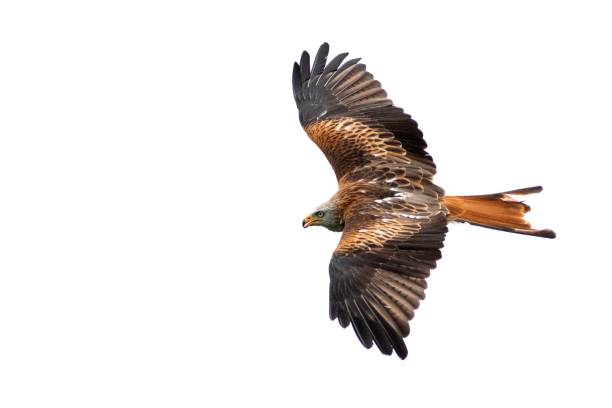
Red Kite (Milvus milvus) in flight Red Kite (Milvus milvus) in flight red kite stock pictures, royalty-free photos & images

It was a day that felt complete in every sense: butterflies found, history appreciated, and conservation success visible in the sky above us. And it wasn’t quite over yet.

On the journey home, we called in at Grafton Woods, Worcestershire, where the day ended on a high note — Jenna’s first-ever Brown Hairstreak, a fitting finale to an already memorable outing.


Some days deliver exactly what you hope for. Others give you far more.

Friday, August 23, 2024

A LITTLE BIT OF EVERYTHING-NORFOLK

Below are photographs I have taken over the last few weeks in Norfolk whilst staying with friends. I have been visiting different places in the county and seen some amazing wildlife on my travels.The moth trap has also been busy and used on a daily basis.

 Lepidoptera


Great Jersey Moth


Poplar Hawk Moth


Rosy Footman


Least Carpet


Clouded Silver


Scarce Footman


Bordered Beauty


Flounced Rustic


Clouded Silver

Grasshoppers & Crickets


Large Marshgrasshopper


Lesser Field Grasshopper


Bog Brush-Cricket


Common Field Grasshopper

Odonata 


Azure Damselfly


Common Darter


Small Redeye Damselfly


Willow Emerald Damselfly


Migrant Hawker


Common Emerald

Butterflies 


Silver Studded Blue


Chalkhill Blue


Brimstone


Swallowtail


Silver Studded Blue


Adder


Badger


Chinese Water Deer