Fatbirder's Top 1000 Birding Websites
MEGA BIRD NEWS:12th August 2026--Black-winged Kite-Norfolk-Hempstead Marshes-Zitting Cisticola-Suffolk-Walberswick-Long-tailed Shrike-Gloucestershire-Eastleach Martin-Hudsonian Godwit-Suffolk-Manningtree-

Tuesday, September 14, 2010

Barolo Shearwater-Meols-14th September 2010

Where do I even start? After a well-earned lie-in following a night shift, Allan Conlin phoned with thrilling news: a Wryneck had been found on the North Wirral coast. I got myself ready and soon arrived on site. The bird was flighty at first, but we eventually located it sitting low in a bush, allowing us some good views.

After soaking in the moment, Allan and I decided to try a seawatch off Meols Promenade. Scopes set up, we quickly connected with our first Leach’s Petrels of the year, followed by a Black Tern. Then came the moment that sent my heart racing: Allan shouted, “OH SHIT!”

“What have you got?” I asked.

LITTLE SHEARWATER!

I managed to get on the bird immediately and could hardly believe my eyes. Watching it glide past was utterly surreal—I was in complete shock! Thankfully, Allan had seen this species recently in Lanzarote, so he was able to pick it up while I was distracted on the phone, constantly calling out details about the bird’s jizz as it passed. It was one of those magical birding moments you never forget.

Historical Context: Little Shearwater is extremely rare in the UK. If accepted, this will be only the second record for Cheshire and Wirral, the first being at Rostherne Mere in 1977 (June 29th–July 2nd). That bird was initially thought to be a Manx Shearwater until it became sick and was subsequently examined; it now resides in Manchester Museum.

This sighting was a reminder of the thrill of seabird watching: patience, teamwork, and a little luck can deliver experiences you’ll remember for a lifetime.

Me And Al After Our Great Find


Wednesday, September 01, 2010

EASTERN OLIVACEOUS WARBLER OLD FALL PLANTATION-FLAMBOROUGH HEAD-EAST YORKSHIRE 01/09/2010

Just as I was leaving work this afternoon, the pager went off: “Eastern Olivaceous, Flamborough Head!” Adrenaline kicking in, I quickly made arrangements and picked up Malc Curtin along the way. The drive northeast was swift, and within three hours, we arrived on site, but the bird proved elusive.

After a tense twenty-minute wait, the warbler finally revealed itself, flitting among the branches of an apple tree. We were rewarded with superb views, noting its strikingly long bill and pale plumage. Witnessing this bird was thrilling—it’s notoriously tricky to pin down in Britain, and this sighting marks the first record for East Yorkshire.


Birders On Site


There are 18 previous records of this species in Britain and Ireland


2009 Jun 21 Shetland 1 day Plantation and Chalet, Fair Isle, 21st June, trapped, photo. 

2008, Sep 23 to Sep 25, Shetland 3 days Harrier, Foula, first-winter, 23rd–25th September, photo. 

2008 May 17 Dorset 1 day Portland BO, 17th May, trapped, photo. 

2006 Sep 24 to Oct 1 Co.Cork 8 days Cape Clear Island, 24th September to 1st October, photo. 

2003 Aug 31 Dorset 1 day Portland, first-winter, trapped, 31st August, photo. 

2002 Aug 24 Essex 1 day Dengie, trapped, 24th August, photo (Birding World). Pending / not submitted 

2002, Aug 18 to Aug 28 Shetland 11 days Sandwick/Hoswick, Mainland, adult, 18th to at least 28th August, trapped 18th August, photo. 

2000 Sep 13 to Sep 21 Aberdeens 9 days Collieston, 13th to 21st September, trapped 15th September, photo. 

1999 Sep 18 to Oct 9 Co.Cork 22 days Cape Clear Island, first-winter, trapped, 18th September to 9th October. 

1999 Jul 4 to Jul 5 Dorset 2 days Portland Bill, 4th to 5th July, trapped 4th July. 

1998 Sep 24 to Oct 8 Isles of Scilly 15 days St Agnes, 24th September to 8th October, photo. 

1995 Aug 12 to Aug 13 Suffolk, 2 days Benacre, 12th to 13th August, photo. 

1995 Jun 5 to Jun 13 Shetland, 9 days Fair Isle, 5th to 13th June, trapped 5th June, photo. 

1985, Oct 17 to Oct 27 Isles of Scilly, 11 days St Mary's, 17th to 27th October, photo. 

1984, Oct 16 to Oct 26 Isles of Scilly, 11 days St Mary's, 16th to 26th October, photo. 

1977 Sep 16 Co. Cork 1 day Dursey Island, trapped, 16th September, photo. 

1967 Sep 27 Kent 1 day, Sandwich Bay, trapped, 27th September. 

1967 Sep 24 to Sep 26 Fife 3 days 

Isle of May, trapped, 24th to 26th September, when killed by Great Grey Shrike Lanius excubitor, now at National Museums of Scotland (NMSZ 1968.73).


Watching this elusive species finally appear was a reminder of why birding combines patience, persistence, and a bit of luck—moments like this are what make the chase so exhilarating.

Monday, August 16, 2010

SYKES`S WARBLER DRURIDGE BAY-NORTHUMBERLAND 16/08/2010

News of a Booted Warbler in Northumberland had me holding out hope; it could be a Sykes’s Warbler, a lifer I’d been chasing for a long time. By late afternoon, good photos confirmed the identification, and the Mega alert finally went off… at 10:00 pm. Unfortunately, I was stuck at work on a night shift. I felt gutted, thinking the bird would vanish overnight.

After a few frantic phone calls, a kind nurse offered to cover my early shift so I could leave at 7:00 am. With fingers crossed, I waited for confirmation. Thankfully, the bird was still present by morning, so I set off on the long journey northeast.

I arrived at Duridge Bay at 10:30 am, and luck was on my side; the Sykes’s Warbler appeared almost immediately. It was a cracking record for the mainland, and the bird gave fantastic views while on site. 

After soaking in the moment and chatting with fellow birders, I began the long journey home, content with adding another rare British species to my list. It was truly a privilege to see such a rare species on the mainland, and the experience reminded me why birding is such a thrilling mix of patience, persistence, and luck.

Sykes's Warbler


Pictures kindly given to me by Tom Tams


There have been 12 previous records of this species in Britain and Ireland


2009 Sep 29 to Sep 29 Co. Durham 1 day or Booted Warbler: Marsden Quarry, 29th September. 

2008 Sep 25 Shetland 1 day Sumburgh Head, Mainland, probably first-winter, 25th September, photo. 

2003 Oct 4 to Oct 8 Shetland 5 days Baltasound, Unst, 4th to 8th October, trapped 5th October, photo. 

2003 Sep 29 to Oct 1 Orkney 3 days North Ronaldsay, 29th September to 1st October, trapped 29th September. 

2002 Aug 31 Sussex 1 day Beachy Head, 31st August, photo. 

2002 Aug 26 Orkney, 1 day North Ronaldsay, trapped, 26th August, photo. 

2002 Aug 23 Norfolk 1 day, Sheringham, 23rd August, photo. 

2000 Jul 1 Dorset 1 day Portland Bill, trapped, 1st July, photo. 

1993, Oct 22 to Nov 9, Shetland, 19 days, Seafield, Lerwick, Mainland, adult, 22nd October to 9th November, trapped 24th October, photo. 

1990 Oct 17 Co. Cork 1 day Cape Clear Island, 17th October, photo. 

1977 Aug 20 to Aug 27 Shetland 8 days Fair Isle, first-winter, 20th to 27th August, trapped 20th August, photo. 

1959, Aug 29 to Aug 31, Shetland 3 days, Fair Isle, adult, 29th to 31st August, trapped 29th August. 


Monday, May 03, 2010

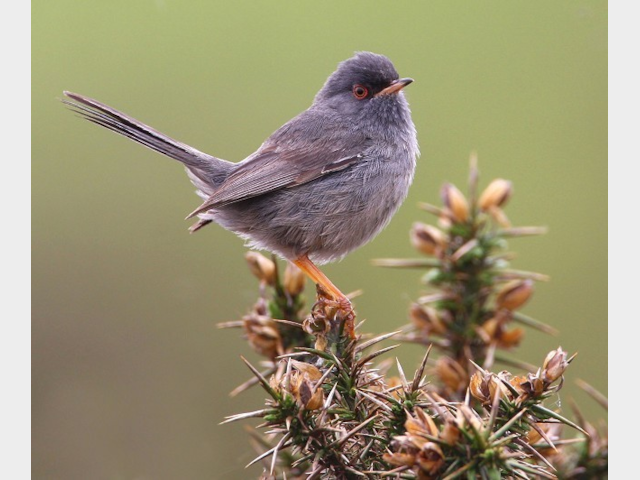
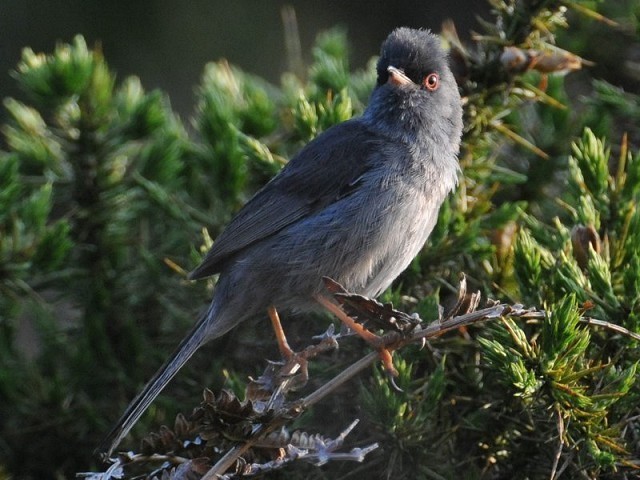
MARMORA`S WARBLER-BLORENGE-GWENT 03/05/2010

As I was starting my three-day break in Norfolk, the MEGA alert went off just as I was getting onto the A14. A quick turnaround later, and I was driving back south, according to the sat nav, only an hour and forty minutes away from a truly rare bird. Dan Pointon had tried to call me an hour earlier, but my phone had been on silent!

Making good time, I soon reached the base of a steep mountain track. The climb was endless, requiring first and second gear for most of the way. At the top, Dan was already on site and guided me into the car park. Frustratingly, the bird could be heard singing for the next fifteen minutes, hidden deep in the undergrowth. Then, suddenly, it appeared, flying right in front of us and perching briefly on a stone wall. What a view! The bird then moved to a nearby holly bush, singing its heart out in full view, allowing us to admire this incredible rarity.


Marmora's Warbler

Marmora's Warbler


Me and Dan On Site


Marmora’s Warbler is a Mediterranean species rarely seen in Britain. Before this sighting, there had been only five previous records:


2001 May 29 Suffolk 1 day Sizewell, male, 29th May, video, photo. 

2001 May 12 to May 18 Norfolk 7 days Scolt Head, in song, 12th, 18th May.

1993 May 23 to May 27 Borders 5 days St Abb's Head, male, in song, 23rd to 27th May, 

1992 Jun 8 to Jun 9 Yorks 2 days Spurn, in song, 8th to 9th June, trapped 8th June, photo. 

1982 May 15 to Jul 24 Yorks 71 days Midhope Moor, male, in song, 15th May to 24th July 


Thanks to a keen birder doing a Whinchat count in the area, the Marmora’s Warbler was found and treated us to unforgettable views. After soaking in the sighting, we continued east to Norfolk, elated by this rare encounter.

Saturday, April 24, 2010

KENTISH PLOVER DAWLISH WARREN-DEVON 24/04/2010

Some birds are legendary for testing your patience, but the Kentish Plover had become my ultimate bogey bird. I’d missed countless opportunities over the years, either arriving too late or the birds departing just hours before. When news of a female Kentish Plover breaking on the pager on Friday afternoon, I immediately plotted my next move.

I set off at 6.00 am the next morning, first calling in at Farndon. There, in a ploughed potato field, I connected with a female Dotterel that had arrived the night before, perfect for my Cheshire yearlist. Buoyed by that success, I began the long drive south.

The journey was tense. No updates came in on the Kentish Plover, and by the time I reached Dawlish Warren, Joe from Plymouth delivered the dreaded news: the bird had gone. Gutted doesn’t even begin to cover it. I wandered the site, hoping for a miracle, but the plover was nowhere to be seen.

Late afternoon, resigned and frustrated, I took a break on the beach. As I stood up, a Ringed Plover landed nearby. And then, like a miracle, there she was, the female Kentish Plover, showing beautifully. My despair evaporated in an instant; the elation was indescribable. The bird lingered for an hour, allowing plenty of other birders to connect, and I could finally exhale.

It was a day that perfectly captured the highs and lows of birding, from total deflation to complete ecstasy in a matter of hours. Moments like these remind me why I love birding so much.

Picture of the Kentish Plover kindly emailed by Lee Collins, one of the Dawlish regulars.