Fatbirder's Top 1000 Birding Websites
MEGA BIRD NEWS:12th August 2026--Black-winged Kite-Norfolk-Hempstead Marshes-Zitting Cisticola-Suffolk-Walberswick-Long-tailed Shrike-Gloucestershire-Eastleach Martin-Hudsonian Godwit-Suffolk-Manningtree-

Monday, July 20, 2026

A BIRDER’S ROLLERCOASTER: MISSES, MOANS AND MAGIC MOMENTS

The afternoon of 13 July started with a report coming through of a Spur-winged Lapwing at Cavenham Heath in Suffolk. The news was unconfirmed, but the report that it was displaying to nearby Northern Lapwings was enough to get the heart racing.

I was still smarting from not being able to go for the Blue-cheeked Bee-eater on Papa Westray, Orkney, which had been found the day before. Unfortunately, work commitments meant I couldn’t make the journey north, with the following day already tied up. It was one of those moments where birding takes second place to reality, but that didn’t make it any easier!

So instead, I headed over to Suffolk to try my luck with the Spur-winged Lapwing. On arrival, I met up with Steve Gantlett and Neil Bostock, but there was no sign of the bird. We searched and waited, but as the afternoon wore on there was still nothing.

I stayed until dusk with Steve, hoping that at any moment the bird would appear, but it just wasn’t meant to be. As the light faded, the thoughts of Papa Westray were still nagging away at me.

Bloody work! Any other day and I would have been heading north.

The next morning, I woke up and, as expected, the photos eventually started appearing across social media. My good friend Sam Viles had done what every birder hopes to do;  he had moved quickly and connected with the Blue-cheeked Bee-eater.

Fair play to him!
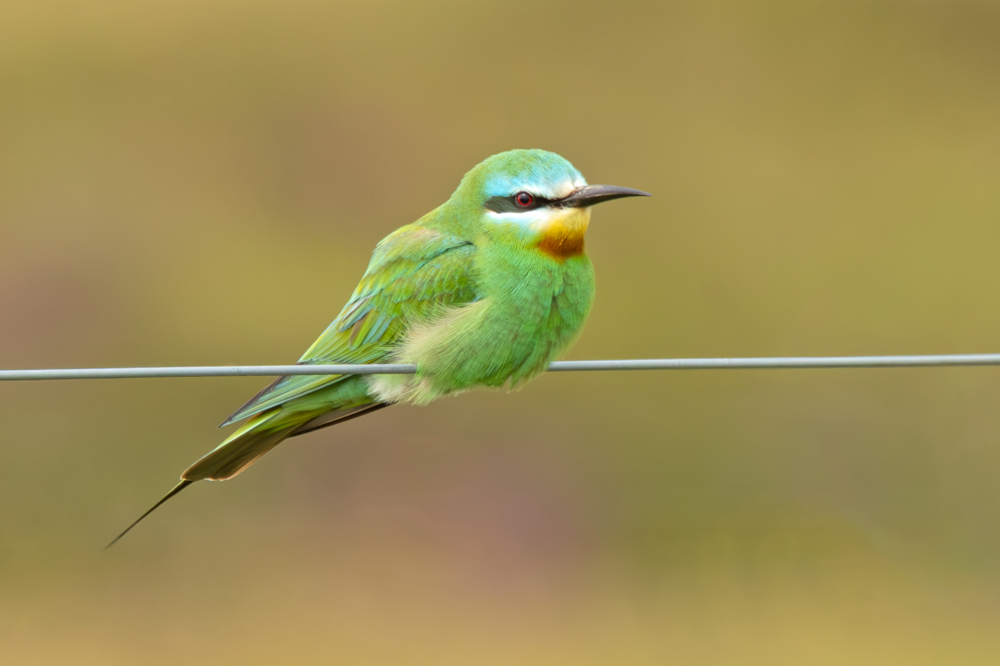
What a bird!
(c)Sam Viles

That was the real kick in the teeth. A bird I desperately wanted to see had slipped through my fingers, and then another incredible thing happened.

Over the weekend, news broke of a first-summer Long-tailed Shrike in a remote area of Gloucestershire. Even more frustratingly, the bird had apparently been present since 8 July, and it was a different individual from the one at Crail, Fife, which I had seen the previous week.

Not only that, it was only around twenty minutes from where I had been staying while working for the last couple of months.

Unbelievable!

You put in the miles, chase birds all over the country, and then another one appears almost on your doorstep. That’s birding for you!

Anyway, moan over. That’s exactly why we twitch. The highs, the lows, the missed chances, and those unforgettable moments when everything finally comes together.

Then came Monday morning.

My mate Steve Tomlinson arrived at work with a big smile on his face and that look birders know all too well.

“You coming to see another one this afternoon?”

After finishing work, we jumped in the car and made the short drive to Eastleach Martin. The result? Absolutely fantastic views of the Long-tailed Shrike.

(c) Adrian Webb

Standing there watching it, I honestly couldn’t believe what I was seeing. Two Long-tailed Shrikes in the space of a month, something I never would have dreamed possible.

From the frustration of missing the bee-eater to the sheer joy of watching another Long-tailed Shrike just down the road, it summed up everything that makes birding so addictive.

You take the knocks, you suffer the misses, but then you get moments like this.

And that’s why I keep going.


Sunday, July 19, 2026

PENSYCHNANT ASHWORTH'S RUSTIC WEEKEND 2026

Our annual pilgrimage to Pensychnant Nature Reserve nearly didn’t happen this year after a devastating wildfire swept across Sychnant Mountain earlier in the week. The fire destroyed around 230 acres of heathland, leaving much of the mountain blackened and inaccessible. Sadly, this meant our planned search for the rare Ashworth’s Rustic on the mountain had to be cancelled.


Utter devastation

Thankfully, the event itself was back on, though trapping could only take place around the nature reserve, not on the mountain.

Not wanting to miss the chance of seeing this iconic Welsh moth, Jenna and I headed into Snowdonia and found an alternative site to trap for the night.


Three traps were put out around Llyn Ogwen

It turned out to be well worth the effort, with over 20 Ashworth’s Rustic coming to the traps by morning. 

Morning mist over Llyn Ogwen


We took several back to Pensychnant so visitors could enjoy seeing this incredible species up close.

Pensychnant nature reserve


The Ashworth's rustic is a very localised species, occurring only in the mountainous regions of North Wales, where it inhabits slate and limestone hills. 
The single generation flies between June and August, when it comes to light.

It was great to catch up with familiar faces and meet new ones throughout the day.


Marc congratulating me on saving the day by trapping the Ashworth's Rustic


Alongside the Ashworth’s Rustics, there were over 50 species of moths on display, including Clearwings, Hawkmoths and a fantastic selection of micros and macros. The gallery was once again filled with beautiful wildlife artwork, and, as always, there was plenty of tea, cake and moth chat.

Best bit of the day: Karen's homemade cakes.

A huge thank you to Julian, Karen and all the volunteers for making the weekend possible despite everything that had happened. Considering the circumstances, it was a brilliant event and one we’ll certainly remember

BIRDGUIDES REVIEW OF THE WEEK:13TH-19TH JULY 2026

The scintillating summer spell of 2026 continued this week, with a run of mega-rare finds and refinds from Essex, Gloucestershire, Orkney and East Yorkshire – and perhaps the biggest prize of all is still to be confirmed from Suffolk. Read more>

Wednesday, July 15, 2026

MISSION COMPLETE – ALL 16 BRITISH CLEARWINGS SEEN

Well, after two years of trying for Raspberry Clearwing, I was scrolling through Facebook when a guy called Jean posted in the Clearwing Moths Facebook group that he had trapped one near the Chilterns-Oxfordshire. As soon as I saw the post, I messaged Jean, and after several texts back and forth, we made plans to visit the site.

Jean had found this site by exploring the local woodlands around where he lives, looking for patches of wild raspberry. It wasn't somewhere I would ever have thought of looking.

Wild Raspberries

As soon as we put out the pheromone lure, a Raspberry Clearwing came straight in before flying off again. We walked further down the woodland ride, and another came into the lure. Finally, one flew into the trap, giving us brilliant views.


Raspberry Clearwing
(c) Jean-Paul Brouard

I honestly couldn't believe I had finally seen one. I had spent countless hours searching around allotments over the last couple of years, thinking that was where I'd eventually find one, yet here in this woodland were several small colonies tucked away amongst the wild raspberry. It just shows that sometimes thinking outside the box really does pay off.

The Raspberry Clearwing has a remarkably long life cycle, spending up to two years as a larva feeding inside the roots and lower stems of raspberry canes before pupating for just a few weeks and emerging as an adult during July. The larvae overwinter twice within the roots and stems before forming a gall at the base of the cane during their second year.

The species is thought to have been accidentally introduced into Britain from mainland Europe on imported raspberry plants. It was first recorded in Britain in 2007 in North Hertfordshire and South Cambridgeshire after Jim Reid discovered larval workings while pruning raspberry canes in his garden. Adults were later confirmed using pheromone lures in nearby fruit farms. Although fairly widespread across mainland Europe, Raspberry Clearwing doesn't disperse over long distances, which supports the theory that our British population originated from imported plants.

A massive thank you to Jean for taking the time to meet me and show me this fantastic site. Without his local knowledge, I'd probably still be searching allotments!

With today's success, I've now seen all 16 British clearwing species. It's been a brilliant journey that's taken me to some amazing places around the country. I've learnt so much about their food plants, habitats and life cycles, met some great people along the way and spent countless hours travelling and searching for these incredible moths.

Finally seeing Raspberry Clearwing and completing the full set is something I'll never forget. Every mile travelled, every early start, and every failed search has been worth it. Mission accomplished.

Sunday, July 12, 2026

BIRDGUIDES REVIEW OF THE WEEK:6TH-12TH JULY 2026

After an almost non-stop few weeks of exciting rarity activity across Britain and Ireland, action took on a more expected, sedate tone as we headed further into July. Read more>