All in all, a fantastic morning’s birding and another welcome addition to the Cheshire year list.
Saturday, December 19, 2015
GREEN WINGED TEAL-FRODSHAM MARSHES
Tuesday, December 15, 2015
GREAT NORTHERN DIVER-WEST KIRBY MARINE LAKE
With work dominating recent weeks, I was pleased to steal a few hours for birding at West Kirby. A juvenile Great Northern Diver had been frequenting the marina for the past week and, on arrival, it was showing exceptionally well, swimming close to the roadside and offering prolonged views.
Monday, October 26, 2015
A CHESTNUT BUNTING ON THE EDGE OF BRITAIN
Last week, a photograph emerged of an unusual bunting found on the remote Orkney island of Papa Westray. The image was far from conclusive, the bird partially obscured in vegetation, but it immediately sparked intrigue. Early thoughts suggested something remarkable: a Chestnut Bunting. With no further sightings, the bird was quickly forgotten, written off as a fleeting mystery not worth the considerable effort of pursuit.
That possibility became reality on 25 October, when news broke that the Papa Westray bunting had been refound. Phones rang, plans were made at speed, and a team assembled for my first ever scheduled charter flight with Sean Cole, Phil Woollen, Chris Bromley, and Stuart Butchart. The next morning, we were heading north.

On arrival, we were met by Jonathan, the island ranger, who led us straight to the site. There, feeding unconcernedly in long vegetation, was the bird itself. For the next couple of hours, it teased observers, playing hide and seek as it fed voraciously, only occasionally offering partial views through the stems.
Patience was eventually rewarded when the bunting flew up onto a nearby dry-stone wall. Here it showed superbly, seemingly indifferent to human presence, pausing to feed before scuttling back into its preferred patch of pineapple mayweed and annual meadow grass.
The significance of this bird lies not only in its rarity but in how well it fits established patterns of natural occurrence. The Chestnut Bunting is a highly migratory species that breeds across northeast Asia, from eastern Siberia and the Russian Far East through parts of Mongolia and northeastern China. Each autumn it undertakes a long southward migration, wintering in southern China and Southeast Asia, including Myanmar, Thailand, Laos, Vietnam, and Cambodia. Late autumn vagrancy to western Europe, while exceptional, is entirely consistent with this migration system.
Currently, Chestnut Bunting sits in Category E of the British List, with previous British records considered escapes from captivity. However, there are nine accepted records in the Western Palearctic, all occurring between late September and mid-November, exactly the window into which the Papa Westray bird falls.
Given its timing, location, behaviour, and association with a wider arrival of Siberian migrants, there is no reason to suspect this bird was anything other than wild. As such, the Papa Westray Chestnut Bunting may yet prove to be the first genuine record of this species for Britain, a landmark discovery made on one of the country’s most remote and evocative islands.
Tuesday, October 13, 2015
A Transatlantic Gem: Wilson’s Warbler on the Isle of Lewis Thirty years to the day since Britain’s last record
October 13th delivered a truly special treat when news broke that a Wilson’s Warbler had been found on the Isle of Lewis, remarkably, exactly 30 years to the day since the species was last recorded in Britain. With a swift team assembly, I set off with Dan Pointon, John Pegden, and Mike Frosdick, driving through the night to Ullapool before catching the ferry across to Stornoway.
We arrived the following morning and were rewarded almost immediately with superb views of this cracking little Nearctic migrant. Watching such a scarce visitor feeding actively in a Hebridean setting was surreal and unforgettable.

This remarkable individual represented the first record for Scotland, the second for Britain, following the long-standing record at Rame Head, Cornwall, on 13 October 1985, and the third for Britain & Ireland, after a bird recorded on Dursey Island, County Cork, in 2013, making its appearance on the same calendar date as the original British record all the more extraordinary.
In a European context, Wilson’s Warbler is an exceptional vagrant, with only a handful of records across the Western Palearctic. In Britain and Ireland, it remains one of the rarest Nearctic warblers ever recorded, with just three accepted records, each separated by many years and each occurring in October, highlighting the species’ extreme scarcity and the extraordinary nature of this Lewis bird.
To connect with a bird of this calibre, especially under such remarkable circumstances, was a real privilege and one of those birding moments that will linger long in the memory.

Friday, May 15, 2015
A MOUNTAIN FINCH ON THE NORFOLK DUNES
News broke this morning of a truly astonishing bird: a Citril Finch feeding among the dunes and pinewoods of north Norfolk. For a species that is essentially sedentary and strongly tied to high mountain habitats, the news felt almost unreal.
The Citril Finch is a bird of altitude and isolation, breeding mainly in the Pyrenees and the high ranges of central Europe, from the Alps east to the Black Forest. Outside these upland strongholds, it is rarely encountered, and long-distance movements are exceptional. In a British context, the species is virtually mythical, with just one previous record: a male on Fair Isle in June 2008 that remained for around five days. Never in my wildest dreams did I imagine there would be another, let alone so soon.
There was no hesitation. I was soon in the car heading east with my son Dylan, and four hours later, we were parked up at Lady Anne’s Drive. From there, we set off on the long trek towards the far edge of the pinewoods where they meet Burnham Overy Staithe — a solid half-hour yomp through sand and needles.
Then, almost absurdly, within two minutes of arriving, the bird appeared. There it was, feeding on the ground at the base of a pine, completely unconcerned and utterly out of place. The sense of disbelief was overwhelming.
Unbelievable. And instantly evocative too, bringing back a powerful grip of memories of that Fair Isle bird all those years ago — a once-in-a-generation encounter, now improbably repeated.
Monday, April 20, 2015
A SPRING PILGRIMAGE:GREAT BLUE HERON ON THE ISLES OF SCILLY
Spring birding in Britain often begins with anticipation rather than certainty, but occasionally a single phone call changes everything. On 14 April, that call came from Higgo, my good friend on the Isles of Scilly, with news that a Great Blue Heron had been found on St Mary’s. Discovered by Ash Fisher, it represented only the second record of the species for the UK.
For me, the moment carried a strong sense of unfinished business. Ash had also been responsible for the first British record, again on Scilly, when a juvenile Great Blue Heron was found at Lower Moors, St Mary’s, on 7 December 2007, during a period of strong westerly storms. That bird lingered only briefly and was seen by a fortunate few island residents. I had not been among them.
I travelled through the night to Penzance, catching the Scillonian the following morning. A full day spent walking St Mary’s proved tantalisingly close. I narrowly missed the bird in Holy Vale, and later that afternoon, three or four birders watched it fly off. Despite staying overnight and covering the island again the next day, there was no further sign.
Then came the blow. On my return to Penzance that evening, news broke that the heron had been refound on Bryher, a classic Scillonian twist, and a real kick in the teeth.
Round two began on Sunday night, leaving Cheshire with Phil Woollen to once again catch the first Scillonian on Monday morning. This crossing could not have been more different: flat calm, brilliant sunshine, mugs of tea, and familiar conversations with old friends.
On arrival at St Mary’s, we transferred straight onto an inter-island boat bound for Bryher. Higgo’s message that the heron was still present lifted spirits further, though a slight complication arose when the boatman announced that we’d need to be ferried ashore by dinghy and wade the final few yards.
It was worth every soggy step.
Higgo was waiting on the beach, and after a brisk walk, we reached the Hell Bay Hotel, where the Great Blue Heron was fishing calmly on the Great Pool. Towering, slate-blue, and unmistakably American, it fed methodically, completely at ease, an astonishing sight in a Scillonian landscape.

Eventually, hunger drew us away, and we headed up to the Vine Café for tea and sandwiches. With time to spare before the 15:30 pick-up, we explored the island further, enjoying the scenery and fitting in some casual birding.
We also sought out one of Bryher’s botanical specialities: the Dwarf Pansy, a minute and exceptionally rare plant with only two UK sites, both on the Isles of Scilly. The plants were present, tiny and easily overlooked, but deeply satisfying to see.
The Hoopoe Higgo had found the previous day, however, remained elusive.
A rising tide spared us another wade, and back at the quay we were met by an old friend, Joe Pender’s boat, Sapphire, for the return to St Mary’s. Back aboard the Scillonian, pasty and tea in hand, it was finally time to relax.
The journey home passed quickly, and I was back in Cheshire in just under six hours, falling into bed after another 25-hour epic—exhausted, but content.
Monday, February 24, 2014
TWITCHERS: A VERY BRITISH OBSESSION
2010 BBC Four documentary about twitchers featuring Mya-Rose Birdgirl Craig, Twitchers: A Very British Obsession, Birdgirl cut. Filmed in Autumn 2009.
Thursday, December 20, 2012
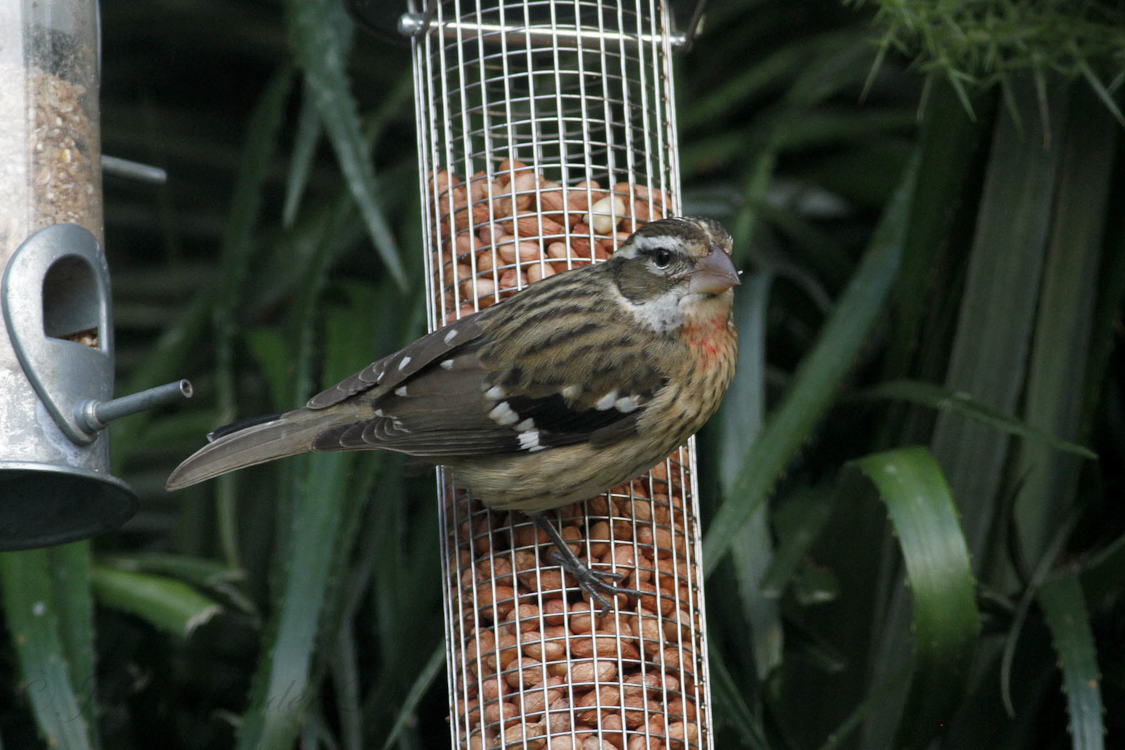
ROSE-BREASTED GROSBEAK-CHURCH ROAD-ST MARYS-ISLES OF SCILLY-20/12/2012
Well, where do I start? After the news broke, I was meant to travel with Stewart Pinner, but with all the flights fully booked, I was forced to wait for a 7:30am departure from Newquay on Thursday morning. I picked Higgo up from Birmingham at 12:30 am; he’d been visiting his parents and was heading back down to the Isles of Scilly, and we headed south, reaching Newquay Airport at around 4am. We grabbed a few hours’ sleep in the car, only to wake just after 7am to find thick fog had set in.
Six hours later and following a blown engine on the aircraft, the travel nightmare finally came to an end when I landed on St Mary’s just after 2pm. The Grosbeak had been showing earlier but had disappeared, before thankfully being refound in Joe Pender’s back garden, feeding on his feeders. The views I enjoyed from his kitchen window were absolutely crippling.
After such a frustrating journey, that moment made it all worthwhile. I was especially made up, having missed the St Agnes bird by just one day back in 2007 while driving home from a five-day stint on the Scillies. After plenty of handshakes and hugs, I departed just after 5:30pm and made it home shortly after midnight, a memorable 24 hours of birding that rounded off the year in style, with gripbacks in abundance.

There have been 23 records of this species in Britain and Ireland
2007 Oct 23 to Oct 29 Isles of Scilly 1 7 days St Agnes, first-winter male, 23rd to 29th October, photo.
2006 May 4 to May 5 Norfolk 1 2 days Holme, first-summer male, 4th to 5th May, photo.
2005 Oct 8 Western Isles
1 day Ardmhor plantation, Barra, first-winter male, 8th October, photo.
2001 Oct 13 to Oct 14 Isles of Scilly 1 2 days St Martin's, first-winter male, 13th to 14th October, photo.
2001 Oct 6 to Oct 9 Devon 1 4 days Lundy, first-winter male, 6th to 9th October, photo.
2000 Sep 29 Co. Kerry 1 day Great Blasket Island, female, 29th September.
1998 Oct 30 to Nov 1 Isles of Scilly 1 3 days Bryher, first-winter male, 30th October to 1st November, photo.
1995 Oct 30 to Nov 1 Isle of Wight 1 3 days Ventnor, first-winter male, 30th October to 1st November.
1993 Oct 12 to Oct 14 Isles of Scilly 1 3 days Tresco, first-winter male, 12th to 14th October, photo.
1991 Nov 5 to Nov 6 Yorks 1 2 days Bridlington, first-winter male, 5th to 6th November, photo.
1988 Sep 29 to Oct 11 Pembrokes 1 13 days Skomer, first-winter female, 29th September to 11th October.
1987, Oct 10 to Oct 13 Guernsey 1 4 days No locality, 10th to 13th October.
1987, Oct 9 to Oct 21 Isles of Scilly 1-13 days Tresco, first-winter female, 9th to 21st October.
1987 Oct 7 to Oct 24 Co. Cork 1 18 days Cape Clear Island, juvenile female, trapped, 7th to 24th October, photo.
1986, Oct 10 to Oct 25 Isles of Scilly 1-16 days Tresco, first-winter male, 10th to 25th October.
1985 Oct 27 Devon 1 day Lundy, first-winter female, trapped 27th October.
1985 Oct 9 to Oct 28 Isles of Scilly 1 20 days St Mary's, first-winter male, 9th to 28th October, photo.
1985 Oct 3 Co. Wexford 1 1 day Near Kilmore, first-winter female, picked up injured, 3rd October, died 7th October, now at Natural History Museum, Dublin.
1983 Oct 19 to Oct 20 Co.Cork 1 2 days Firkeel, first-winter male, 19th to 20th October.
1983 Oct 14 Gwynedd 1 1 day Bardsey, first-winter male, trapped, 14th October.
1983 Oct 10 Co.Cork 1 day Bull Rock, first-winter male, 10th October.
1983 Oct 10 to Oct 19 Isles of Scilly 1 10 days St Agnes, first-winter male, 10th to 19th October, taken by a cat.
1983 Oct 9 to Oct 15 Co. Cork 1 7 days Cape Clear Island, first-winter male, 9th to 15th October, photo.
1983 Oct 7 to Oct 8 Western Isles 1 2 days Newton, North Uist, first-winter male, 7th to 8th October, died in care 8th October.
1979, Oct 12 to Oct 29 Isles of Scilly, 18 days St Mary's, first-winter, 12th to 29th October, photo.
1979, Oct 11 to Oct 12 Co. Cork 1 2 days Cape Clear Island, first-winter female, 11th to 12th October.
1976, Oct 20 to Oct 26 Isles of Scilly 1 7-day Tresco, immature female, 20th to 26th October, photo.
1976, Oct 16 to Oct 31 Isles of Scilly 1-16 days St Mary's, female, 16th to 31st October, photo.
1975 Dec 20 to 1976 Jan 4 Essex 1 16 days Leigh-on-Sea, immature male, 20th December to 4th January 1976.
1975 Sep 26 Sark 1 1 day Banquette Valley, 26th September.
1967 Oct 5 Pembrokes 1 day Skokholm, adult female, trapped, 5th October.
1966 Oct 6 to Oct 11 Isles of Scilly 1 6 days St Agnes, female, 6th to 11th October, trapped 6th.
1962, Oct 7 to Oct 8, Co. Cork 1 2 days Cape Clear Island, first-winter male, 7th to 8th October.