After a great year of birding last year, I decided to take it easy and just go for lifers this year. The year started well when a Glaucous-winged gull was found in Cleveland on January 2nd. Thankfully, after missing the last one in South Wales by minutes, I finally connected with this species.


Glaucous-winged gull

Birders on site
It all went quiet until April 14th, when I visited one of my favourite counties, Hampshire, to see a White throated Sparrow. On the way to see this bird, Dan Pointon had seen a Savi's warbler in Kent early morning, so I decided to drive to Grove Ferry to see if we could see the bird before dusk. On arrival, the bird showed well in front of the hide, which I was totally made up about.


White throated Sparrow

Savi's Warbler

Me on site at Grove ferry
I had to wait till the end of the month, the 30th, for another two lifers, when I travelled to Kent for first light to see a Crested lark, at Dungeness, followed by a long journey west to see a Collared flycatcher at Portland in Devon.
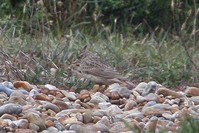
Crested lark


Collared flycatcher
On the 1st of March, a Pallid swift was found at Crosby Marina in Liverpool. The bird showed really well on arrival.


Pallid Swift
On the 5th of May, I picked Dan Pointon up from Bristol and travelled down to Dawlish Warren, where we connected with a Western sandpiper in Devon.


All was quiet then until the beginning of June, when on the 3rd, I ended up back at Dungeness in Kent to see a stunning Oriental pratincole.


Oriental Pratincole

Me, Robo and Ian at Dungeness
The mega bird of the month was on the 20th of June, which I finally nailed after previously dipping on the first day, was a Royal tern, which ended up at Llandudno promenade. Thankfully, I got out of work and had cracking views of it as it flew right in front of me.

Royal Tern
July was a fantastic month for me, when on the 5th, Mark Payne relocated a Caspian tern at Wiggenhall St Germans in Norfolk, which he found further down the river after it had flown. We thought we had all missed it.

Caspian Tern
At the end of the month, I visited my favourite place, the Isles of Scilly, for a pelagic weekend with Mark Powell, Ash, and Ken. I had tried to see Wilson’s Petrel on numerous occasions but had never succeeded. However, the weekend turned out to be an unforgettable experience.
As soon as we arrived, Bob Flood had organised a pelagic trip for Friday evening. Within just an hour of venturing off Martin's, I spotted my first Wilson’s Petrel during a terrible storm—an experience I will never forget. The next morning, we headed out again and encountered over nine Wilson’s Petrels, which is the best record ever from a pelagic trip. It truly was an unbelievable day!

My first Wilson's Petrel

Mark Powell and I, out at sea
August was very quiet until the 8th, when I finally connected with a Great Spotted Cuckoo at Weybourne in Norfolk, with Dan, after dipping miserably in Cornwall in May.

Great spotted cuckoo

Me, enjoying the moment.
News broke on the 31st that an American Black tern had been found at Farmoor reservoir in Oxfordshire. Pete Antrobus and I made the journey south and connected with the bird.

American Black tern
On the 22nd of September, I visited the Orkneys with Dan to see a Sandhill crane.

Sandhill Crane

Birders On Site
My yearly trip to the Shetlands produced another lifer, Taiga flycatcher on the 29th, the bird was found on Fetlar and was a real grip back after missing the Flamborough bird in 2003


Taiga flycatcher
On October 24th, I left my annual holiday on the Scillies to visit Trow Quarry in County Durham, where a British first had been discovered: the Eastern crowned warbler.


Eastern crowned warbler

Early morning, waiting for our first views of the Eastern crowned warbler.


Newspaper articles about the bird
November 7th saw me in Kent at Pegwell Bay, where I saw my first Fan-tailed warbler.


Fan-tailed warbler
What a year's birding, life list now on 445 species, Roll on 2010!


