Fatbirder's Top 1000 Birding Websites

Thursday, December 25, 2025

CHESHIRE AND WIRRAL BIRD NEWS


25th December 

Little Gull-1st Winter- Budworth Mere-Northwich

Caspian Gull-Rosetherne Mere

Hen Harrier-Male-Parkgate

24thDecember

Short eared Owl-Within Way-Hale

Hen Harrier (grey male) - Heswall Marsh

2 Short-eared Owl off Old Baths and a Hen Harrier (grey male) - Parkgate 

23rd December 

Caspian Gull-Adult again-Sandbach Flashes

Short-eared Owl-Again near lighthouse at Hale Head this morning-Hale

Short-eared Owl-One again off Old Baths car park-Parkgate

22nd December 

Bittern flew towards Neston reed bed, also 7 Greenshank - Parkgate

Belated news-Purple Heron at Dutton Locks, near the viaduct, for a week from 20th October. Bird was photographed.

Caspian Gull-Two 1st-winters at WSR Recycling Centre, Ditton Road-Widnes

1st winter Caspian Gull
(c) Steve Tomlinson

Drake Green-winged Teal-Drake again at Pumphouse Flash-Sandbach Flashes

Black Redstart-Female-type at Bowling Green opposite RNLI Lifeboat Station, though mobile-Hoylake

Short-eared Owl-One at the bottom of Within Way-Hale

21st December 

Drake Green-winged Teal-Boathose flash, Ringtail Hen harrier flew south-Parkgate

Short-eared Owl-Parkgate

Short-eared Owl-Two over Carr lane pools -Hale

20th December

Drake Green-winged Teal- Bevyl road flash and Boathose flash-Parkgate

Green-winged Teal
(c) S.Williams

15 Whooper Swan - Burton Marsh.

Bittern flew south - Parkgate

Mediterranean Gull, 100+ Curlew and 300+ Black-tailed Godwit in big field south of Saughall Massie Road - West Kirby

19th December

Drake Green-winged Teal with 700+ Teal but flushed by Marsh Harrier, also an immature Scaup - Bevyl road flash-Parkgate

Short-eared Owl-The Harp Inn-Little Neston

Siberian Lesser Whitethroat-Possible still from Fen Boardwalk-Burton RSPB

 Short-eared Owl-One over Hale Marsh from Town Lane bridge-Hale

18th December

Black Redstart-1st-winter male on private farm just outside Crewe-Crewe

Siberian Lesser Whitethroat-Possible still from Fen Boardwalk-Burton RSPB

17th December

Siberian Lesser Whitethroat-Possible still from Fen Boardwalk-Burton RSPB

Short-eared owl-Old Baths-Parkgate 

2 Green Sandpiper - Neston Old Quay

Bittern, 8+ Marsh Harrier and a Merlin at dusk - Neston Reed Bed

16th December

2 Short-eared Owl - Old Baths-Parkgate 

Short-eared Owl-The Harp Inn-Little Neston

8 Cattle Egret in field SW of A540 close to Gordale Garden Centre-Neston 

Siberian Lesser Whitethroat-Possible still from Fen Boardwalk-Burton RSPB


Wednesday, December 24, 2025

2025: MY BIRDING YEAR

A Personal Lifelist Highlight

Amid the whirlwind of rarities, one bird stands out on my British lifelist: the White-throated Needletail. A spectacular, high-speed visitor, it was a personal triumph in an otherwise frustratingly ephemeral season.

(c) Ash Howe

Historic Firsts

The White Tern—the first ever recorded in Britain and Europe—was found in the grounds of a Llanberis hotel- North Wales on 27th February. Sadly, this Indo-Pacific candida subspecies died in care, a poignant reminder of the unpredictable nature of rarity.

(c)Sam Whitton

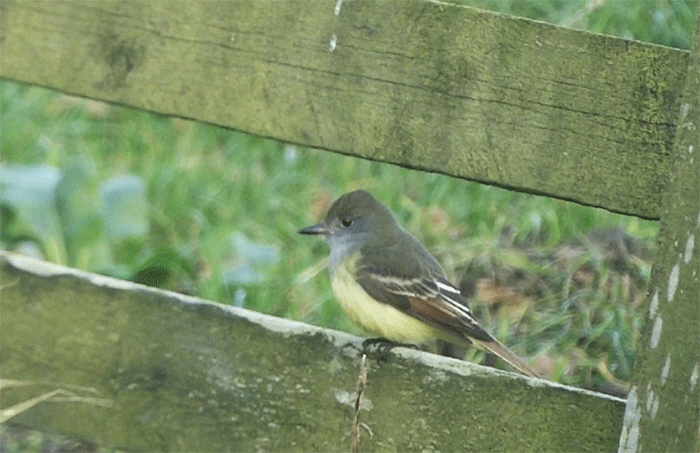
The Great Crested Flycatcher, photographed on Shetland in mid-October, was a true Western Palearctic first. While its images circulated widely, the bird had sadly disappeared before anyone could see it in the field.

(c)Hazel Ulstad

Fleeting Visits

Several one-day wonders defined the season:

  • Western Subalpine Warbler – Gibraltar Point, Lincolnshire, 12th April. I travelled for this bird the next morning, but it had gone.
  • Savannah Sparrow – Shetland, 12th May
(c)Allan Conlin
  • Eastern Bonelli’s Warbler – Kent, 25th May
  • Pallas’s Reed Bunting – Fair Isle, Shetland, 2nd June

(c)Alex Penn

Another Eastern Bonelli’s Warbler on Shetland eluded me due to work commitments, which lingered for four days.

(c)Mark Sutton


Memorable Misses and Friend Wins

Some rarities deserve special mention for the stories behind them:

  • Blue-cheeked Bee-eater – Iona, Argyll, 10th June. Found by observers on the island the day before, it was largely overlooked until my good friend Dan Pointon saw it. The bird vanished the same day—a bittersweet triumph for him.
 Image
(c)Alan Lewis

  • Yellow-browed Bunting – Abbotsbury Swannery, Dorset, 29th September. Briefly trapped and ringed, I started the drive south, but the bird was not refound.
(c)Joe Stockwell

  • Rufous-tailed Robin – North Ronaldsay, Orkney, 21st October. Flushed from under an observer’s feet, it provided only a tantalising glimpse for a lucky finder.

Cheshire, Pelagic Adventures, and Western Palearctic Additions

In August, I braved nine pelagic trips off the Isles of Scilly in pursuit of South Polar Skua and Scopoli’s Shearwater—yet despite the waves, wind, and relentless searching, neither species appeared.

In Cheshire, some notable additions to my life list included:

  • Woodchat Shrike – Bridgewater Canal, Daresbury, 6th June

(c) Elliot Montieth

  • Black Scoter – East Hoyle Bank, Hoylake, 6th March

(c)Phil Jones

On the Western Palearctic front, a drake Spectacled Eider on Texel in the Netherlands was a real highlight in February. While visiting with my friend Dan Pointon, I also added a Pygmy Cormorant and a Black Woodpecker to my Western Palearctic lifelist.

(c)Phil Jones


Reflections on 2025

This year reinforced the joys and frustrations of modern birding. Mega rarities appeared with dazzling unpredictability, often in one-day windows that tested both dedication and luck. Despite connecting with just one mega bird in Britain, the thrill of tracking vagrants, following reports, and sharing in others’ sightings made 2025 a truly memorable season.

In the world of rare birds, sometimes the stories of near-misses are just as compelling as the birds themselves. In that sense, 2025 was nothing short of epic.

Sunday, December 21, 2025

BIRDGUIDES REVIEW OF THE WEEK:15TH-21ST DECEMBER 2025

Hampshire delivered an unexpected headline for the penultimate review of the year. Read more >

BUFFLEHEAD-FORYD BAY-CAERNARFON-21ST DECEMBER 2025

On Monday, 8 December 2025, a Bufflehead was found at the Point of Ayr, Flintshire, where it spent several hours before flying off. Cheshire listers were hopeful that the bird might continue east into the county, but no further reports followed, and the trail soon went cold.

The bird was refound on 19 December at Foryd Bay, Caernarfon, confirming that it had remained in North Wales. Jenna and I made a run out that day to visit the site and, on arrival, the Bufflehead was showing extremely well, allowing excellent views. It was a great bird to catch up with again, my previous encounter having been in April 2004 at Pugneys Country Park, Yorkshire.


Bufflehead is a small, compact diving duck native to North America, breeding across Canada and Alaska and wintering mainly in the United States. The adult male is distinctive, with a bold white head patch contrasting sharply against glossy black and white plumage, while females are more subdued, characterised by brown-grey plumage and a small white cheek patch.

In the UK, Bufflehead is a very rare vagrant. While some individuals are considered genuine transatlantic vagrants, others may involve escapes from captivity, as the species is commonly kept in wildfowl collections. As a result, each record is assessed carefully.

Saturday, December 20, 2025

THE DNA VERDICT "BOAT TAILED GRACKLE IS ACTUALLY A GREAT TAILED GRACKLE"

On 2 November, while travelling to work in Oxfordshire, news reached me that a grackle had been discovered in the RNLI station car park immediately north of Calshot Castle, Hampshire. I was able to see the bird later that day and, although the encounter was thoroughly enjoyable, it was clear from the outset that the circumstances surrounding its arrival would render the record inadmissible for listing purposes.

Subsequent scrutiny of photographs prompted a reassessment of the bird’s identity, leading to its reidentification as a Boat-tailed Grackle Quiscalus major. This interpretation generated considerable interest, as it was thought to represent the first documented ship-assisted occurrence of the species in Britain.

However, the story has since taken a further turn. DNA analysis has now conclusively established that the bird is in fact a male Great-tailed Grackle Quiscalus mexicanus, not a Boat-tailed Grackle. The case serves as a reminder of the identification challenges posed by large Quiscalus grackles and highlights the increasing role of genetic evidence in resolving complex vagrancy records.

Tuesday, December 16, 2025

BIRDGUIDES REVIEW OF THE WEEK:8TH-14TH DECEMBER 2025

A spell of relatively settled conditions made for a steady midwinter period that nevertheless had a surprise or two up its sleeve. Read more>


Monday, December 15, 2025

CHESHIRE AND WIRRAL BIRD NEWS


15th December

Short-eared Owl - Old Baths-Parkgate

14th December

Lesser Whitethroat-One on path to Broad Hide; use reserve car park off Puddington Lane- Burton RSPB

Short-eared Owl - Old Baths-Parkgate

3 Short-eared Owl - Denhall Quay

13th December

Lapland Bunting-One flew west-Hilbre Island

Black Redstart-Female-type in horse paddocks south of Meols Common-Meols

Black Redstart
(c)Allan Conlin

Short-eared Owl-Two again off The Harp Inn-Little Neston

Short-eared Owl-Two on Hale Marsh viewable from Town Lane-Hale Bank

12th December

Black Redstart (fem) on fence line in 'Hoopoe Hollow' (horse paddock behind sand dunes east of the Dove Point car park) - Meols

Black Redstart
(c)Sean O'Hara 

Eurasian Bittern-Again in flight off Old Baths car park and 3 Short-eared owls

7 Red-throated Diver and an Eider on flat, calm sea at low tide - Hoylake

Slavonian Grebe - West Kirby Marine Lake

11th December

Common Scoter-One at East Float, Birkenhead Docks-Birkenhead

Short-eared Owl-three again between Denhall Quay and Neston Reedbed-Little Neston

Slavonian Grebe-One reported late afternoon-West Kirby Marine Lake

10th December

Black Redstart (fem) on top of Community Centre (opp Lifeboat Station) - Hoylake

Short-eared Owl - Denhall Quay

9th December

Black Redstart (fem) on top of Community Centre (opp Lifeboat Station) - Hoylake

10+ Marsh Harrier, Merlin and 2 Stonechat (lunchtime), 3 Short-eared Owl, 25+ Golden Plover, 3 Great White Egret and a Barn Owl this evening -Parkgate

3 Short-eared Owl, 5 Marsh Harrier and 2 Great White Egret - Denhall Quay

Spotted Redshank-One at Boathouse Flash-Parkgate

8th December

Caspian Gull-adult at Elton Hall Flash-Sandbach Flashes

Short-eared Owl - Denhall Quay

Spotted Redshank roosting with Redshanks on the sea wall - Meols

7th December

Short-eared Owl-Parkgate

6 Whooper swans-Puddington

Ruddy Shelduck-Spike Island-Widnes

Short-eared Owl and 6 Whooper swans-Hale

13 Purple Sandpiper, 4 Eider and a Peregrine - Hilbre Island

280 Redshank and 25 Turnstone on pontoon on rising tide - West Kirby Marine Lake

6th December

4 Whooper swans-Puddington

1st Winter Caspian Gull-WSR recycling-Widnes

2 Ruddy Shelduck-Spike Island-Widnes

Green Sandpiper off Marshlands Road - Neston Marsh

Willow Tit by boardwalk just before the second screen - Burton RSPB

5th December 

Adult Yellow-Legged Gull-Neumann's Flash-Northwich

Green-winged Teal-Drake at Pumphouse Flash-Sandbach Flashes

4th December

Bittern and 2 Short-eared owl-Parkgate

3rd December

7 Greenshank-Boathouse Flash-Parkgate

2nd December 

2 Short-eared Owl - Late afternoon -  Neston Marsh

Water Pipit -  Neston Old Quay

Snow bunting over - Little Eye


Sunday, December 14, 2025

SATURDAY BIRDING IN SUFFOLK

A sharp frost marked an early start this morning as I headed to Gedgrave Marshes, following reports of five Tundra Bean Geese seen the previous day. 

Driving east into the sunrise, heading for Gedgrave Marshes

On arrival, the birds were quickly located feeding beside the roadside, offering excellent views. They were in the company of two Egyptian Geese.


The Tundra Bean Goose is a scarce winter visitor to the UK. It breeds on the Arctic tundra of northern Russia and Siberia and migrates south to winter across parts of Europe and Asia. During the winter months, it is most often found in agricultural landscapes, marshes, and wet grassland, making sites like Gedgrave ideal stopover habitat.

Moving on from Gedgrave, I headed north to Kessingland, where I connected with a sizeable flock of over 140 Snow Buntings. The birds were feeding actively and frequently taking flight, creating an impressive spectacle as the flock wheeled around the beach.


The Snow Bunting is an Arctic specialist and is widely regarded as the most northerly-breeding songbird in the world, nesting on high Arctic tundra and even beyond 80°N.


Also present were five Shorelarks, though, unfortunately, they were feeding at a long distance on the far side of a pool, making photography difficult. Before I could get any closer, a dog flushed the birds, and they flew high before disappearing from view and could not be relocated. As a result, I didn’t manage to obtain any photographs, so I've used one from the internet, and hopefully, Paul won't mind.

(c)Paul Baker

The Shorelark, also widely known as the Horned Lark in North America, is a distinctive ground-dwelling bird. In the UK, it is mainly a scarce winter visitor to the eastern coasts, where it forages on open shingle and sandy beaches.

Kessingland beach in the afternoon sun

Walking back to the car, I heard the news: three Zitting Cisticolas had been seen at Walberswick—just half an hour down the road! This had all started on 3 August, when a singing male was first spotted. For weeks, birders debated—were there two birds or just one? The mystery was solved on 16 August, when two adults and a faecal sac confirmed nesting. By 22 August, both parents were feeding at least three fledglings, and the very next day, a fourth chick appeared, confirming beyond doubt that Zitting Cisticola had successfully bred in Britain.

Five Zitting Cisticola (adult [right] and four juveniles)
(c)Chris Darby

I’d only ever seen this species once before, back at Pegwell Bay in Kent in 2009, so I didn’t hesitate—I headed straight there as this was my chance to finally see them, something I’d wanted to do all year despite being tied up with work.
On arrival, I walked down the shingle beach and made my way toward the area where the Zitting Cisticolas had been reported. I stood quietly at the edge of the reedbed, watching for movement, and soon noticed a small flicker among the reeds. A Zitting Cisticola then appeared, perched on top of the reeds.


After about an hour, as the sun began to set, I finally managed to get good views of the other two birds. Seeing all three Zitting Cisticolas was a quietly rewarding experience—more than I had hoped for, and a perfect way to end the day.


Friday, December 12, 2025

DARTFORD WARBLER-RAYDON-SUFFOLK

I was working down in Suffolk this week and, having finished early on Friday, decided it made more sense to stay on for the weekend rather than drive all the way back to Cheshire only to return on Monday. With a good selection of species reported locally and plenty of birds about, the weekend was already looking promising.

My first stop was Raydon, where a Dartford Warbler had been reported the previous day at the disused airfield. On arrival, it didn’t take long before I heard the distinctive call coming from the scrub. Before long, the bird flew up into a small tree and showed remarkably well. For a species that’s usually so skulking and elusive, it was almost a shock to see it so easily and out in the open.

A great start to the weekend, and it definitely set the tone for what I’m hoping will be a productive couple of days in the county.


Sunday, December 07, 2025

RED-NECKED GREBE-FEN DRAYTON LAKES RSPB-CAMBRIDGESHIRE

With my ECOW role in Oxfordshire now completed—which I really enjoyed—I’ve started a new position in Suffolk. On the drive down to begin work today, I made a brief detour to Fen Drayton Lakes (RSPB), as a first-winter Red-necked Grebe has been lingering there for about a week.

A quick scan of the south-east corner of Ferry Lagoon soon picked it up. The grebe was showing well, offering excellent and prolonged views as it fed and drifted across the open water. A cracking way to break up the journey and a nice bonus bird to kick off this next chapter working in Suffolk.

Fen Drayton Lakes (RSPB)


1st winter Red-necked Grebe


BIRDGUIDES REVIEW OF THE WEEK:1ST-7TH DECEMBER 2025

The start of meteorological winter didn't translate to winter doldrums on the birding front, with a fantastically action-packed week full of surprise visitors from all points of the compass. Read more>