MEGA NEWS-4th December 2025-Lesser Crested Tern-Adult-type still on buoy at Exe Estuary (c 50.6106, -3.4372) best viewed north from Dawlish Warren Hide or distantly from Cockwood Dawlish Warren-Dawlish Warren NNR-Devon-
Fatbirder's Top 1000 Birding Websites

Monday, June 30, 2025

SCARLET DARTER-KNIGHTON RESERVOIR-SILVERLAKE-DORSET


On the 18th of June, somebody visited Silverlake in Dorset and photographed two teneral Scarlet Darters. This dragonfly species is very rare, typically found in southern Europe and throughout Africa. I attempted to see them at this site last year, but when I arrived, the weather was overcast, and I could not spot them.

After finishing work early this morning in Oxfordshire, I made the two-hour journey, arriving around lunchtime on a day filled with promising heat and sunshine.

Silverlake

Upon my arrival at the lake, it didn’t take long before I spotted my first Scarlet Darter. Then another one appeared, and within the first few minutes, I had four flying in front of me—unbelievable!


As I circled the lake, I spotted 12 Scarlet darters, 8 of which were striking males.

The first recorded sighting of the Scarlet Darter in Britain occurred at Kimbro Pool on The Lizard in Cornwall on August 7, 1995. Since then, only a few additional sightings have been reported in various locations across Britain. It is believed that global warming has played a role in this species' northward expansion.

While searching for Scarlet Darters, I came across several other species, including the Small Red-eyed Damselfly, Common Blue Damselfly, Blue-tailed Damselfly, Black-tailed Skimmer, Emperor Dragonfly, and a male Lesser Emperor. This species is found throughout southern and central Europe and has gradually spread north. It was first recorded in Great Britain in 1996, where it has since successfully bred.

A superb afternoon, and nice to catch up with some familiar faces on site before starting the journey home. 


CHESHIRE AND WIRRAL BIRD NEWS & UK(MEGAS)

June 30th

National Mega News

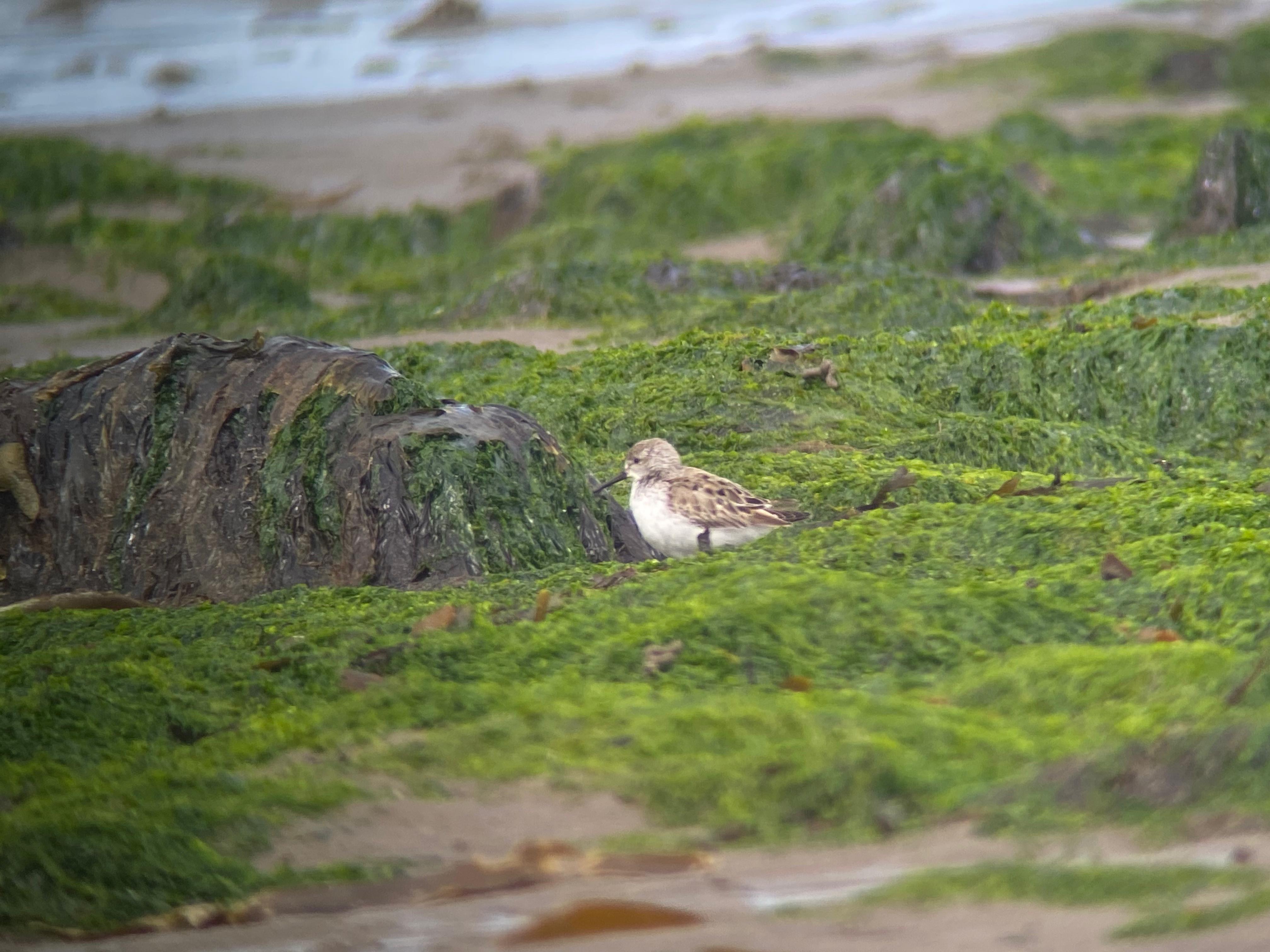
Western Sandpiper-Maidens-Ayrshire


Cheshire and Wirral Bird News

4 Spotted Redshank and a Spoonbill-Burton RSPB

Ruddy Shelduck-Weaver bend-Frodsham Marshes

June 29th

National Mega News

Western Sandpiper-Maidens-Ayrshire


Cheshire and Wirral Bird News

Common Quail-Singing male distantly from The Harp Inn-Parkgate


Ruddy Shelduck-Two below Marsh farm-Frodsham Marshes

June 28th

National Mega News

Western Sandpiper-Maidens-Ayrshire


Cheshire and Wirral Bird News

4 Spotted Redshank and a Spoonbill-Burton RSPB

Channel wagtail-Two males in field at junction of Holly Bush Lane and Woodend Lane-Rixton

2 Channel wagtail-Hale head and a Wood sandpiper-Carr lane pools-Hale

June 27th

National Mega News

Western Sandpiper-Maidens-Ayrshire

Cheshire and Wirral Bird News

Pied flycatcher-One reported by the cafe-Burton RSPB

June 26th

National Mega News

Barolo-Type-Shearwater-One flew past Wra Rocks at Pendeen Watch-Pendeen-Cornwall 

Western Sandpiper-Maidens-Ayrshire


Cheshire and Wirral Bird News

4 Spotted Redshank- Still on Centenary Pool from Border Hide and Eurasian Spoonbill-Burton RSPB

Garganey-Two eclipse drakes on No 3 Bed from John Morgan Hide-Woolston Eyes-Permit Only

25th June 2025

Cheshire and Wirral Bird News

Common Quail-Singing male-Burton Marsh

3 Spotted Redshank-Still on Centenary Pool from Border Hide-Burton RSPB

7 Mediterranean Gull before high tide - Thurstaston Shore.

11 Sandwich Tern, including first juv of the year at high tide - Hoylake Shore.

CHESHIRE AND WIRRAL BIRD NEWS & UK(MEGAS)


24th June 2025

2 Channel Wagtail-Singing males-Hale

(c) Dave Craven

Wood Sandpiper-One nearby in recent days-Winwick

Saturday, June 28, 2025

DAY OUT IN NORTH WALES

Jenna, Harley, and I visited the Pensychnant Nature Reserve in North Wales this morning. It was an open day for the public to learn about the reserve's daily operations.

We had a few informative hours, during which I saw some moths I needed for my list, as they had been trapped overnight. While I enjoyed a drink and homemade cake, a Hummingbird-hawk moth put on a fantastic display on the nearby buddleia.


After the event, we met up with my good friend Marc Hughes and spent the afternoon on the Great Orme near Llandudno.


During our walk, Jenna was thrilled to add the Silver-studded Blue butterfly to her list.


The subspecies Plebejus argus caernensis emerges about a month earlier than others in the UK. Its life cycle is unique, as black ants care for the caterpillars, taking them into their nests and protecting them. When the caterpillars feed, the ants accompany them and, in return, consume a sugary solution that the caterpillars produce.

Another new sighting was the Grayling butterfly, a distinct subspecies, Hipparchia semele thyone, recognised for its smaller size and earlier emergence compared to other UK populations.


The butterfly is common in Europe but is decreasing in both distribution and numbers in the UK. It is considered to be at high risk across Europe due to anticipated climate change.

We also encountered the Horehound Plume moth and its larva next. This micro-moth has been the focus of a project called "Cryptic Creatures of the Creuddyn," which surveys its limestone habitats on the Great Orme and surrounding areas.

Horehound plume moth

Horehound plume larva

Walking over the Great Orme, we came across other species of moth: 

Silky Wave

The species name ‘dilutaria’ is derived from the Latin word "dilutus," which means "washed-out." This refers to the pale colour and faint wing markings of this small and delicate moth. In recent years, the species has been recorded at only a few locations in Wales and western England, including the Great Orme in Conwy, the South Gower coast in Glamorgan, and the Avon Gorge near Bristol. 

Small-purple Barred

As the afternoon was coming to the end of are walkover, we found 4 Slow worms basking in the sun


A great day and loads of first records for us all.

Marc, Harley, and I.


Monday, June 23, 2025

PURPLE EMPEROR BUTTERFLY-BERNWOOD FOREST-OXFORDSHIRE

I finished work this afternoon and made the short journey to Bernwood Forest to try and photograph the Purple Emperor butterflies that have been seen frequently over the weekend.

When I arrived and pulled into the car park, I noticed one just sitting in the middle of the road. I parked the car and ran back to the entrance, and it was still there, basking in the sun. Unbelievable!


Key Characteristics:

Size: One of the largest butterflies in the UK, with a wingspan of 7.5-8.4cm.

Appearance: Males have a distinctive purple sheen on their upper wings with white bands and orange-ringed eyespots, while females are brown with similar eyespots.

Habitat: They inhabit mature woodlands, particularly those with goat willow (their caterpillar foodplant).

Behaviour: Males spend much of their time in the canopy, feeding on aphid honeydew, and occasionally descend to the ground to feed on damp patches or animal droppings.

Flight Period: The main flight period is from late June to early August.

Conservation Status: The Purple Emperor is considered of medium conservation priority by Butterfly Conservation.

As I walked along the track into the forest, I spotted four more Purple Emperors fluttering down from the trees and landing on the path.


I was absolutely thrilled to be witnessing so many Emperors.

There were also good numbers of White admiral and Silver-washed fritillary on the wing.


Silver-washed fritillary

White admiral

As I entered a meadow on the forest's outskirts, I spotted two Black Hairstreaks and two Purple Hairstreaks around the edge of the meadow.


Purple hairstreak

Black hairstreak

What a fantastic area for butterflies! By the time I added up the species I had seen on my walk, it was 15 species. What an afternoon!

Here are the other species I managed to photograph while walking around the area:

Large white


Comma

Large skipper

Red admiral


RED-VEINED DARTER-SOUTHAMPTON COMMON BOATING LAKE

This afternoon, after work, I visited Southampton Common, hoping to see the Red-veined Darters that have been present for over a month. The Red-veined Darter has been observed at this site for the past nine years.

Boating Lake at Southampton Common

I attempted to visit at the end of last month, but the weather took a turn for the worse when I arrived. Fortunately, today was sunny. When I reached the boating lake, I noticed a male basking on the path in the sunlight.


The Red Veined-darter is a common and widespread species in much of central and southern Europe, including most Mediterranean islands. In some years, it migrates northward, and since the 1990s, it has increasingly been observed in Great Britain.

After spending over an hour on site, I counted more than six of them before I was ready to leave. This dragonfly is now on my list, and I really wanted to see this one.


CHESHIRE AND WIRRAL BIRD NEWS & UK(MEGAS)

June 23rd

Cheshire and Wirral Bird News

5 Spotted Redshank- Still on Centenary Pool from Border Hide-Burton RSPB

June 22nd

National Mega News

Western Sandpiper-Maidens-Ayrshire

Cheshire and Wirral Bird News

3 Spotted Redshank-Still on Centenary Pool from Border Hide-Burton RSPB

Wood Sandpiper-Sweeney Wetlands

3 Channel Wagtail-Hale

June 21st

National Mega News

Western Sandpiper-Maidens-Ayrshire

Cheshire and Wirral Bird News

4 Common Scoter-Acre Nook Quarry-Chelford

2 Spotted Redshank and a Curlew sandpiper- Still on Centenary Pool from Border Hide-Burton RSPB

June 20th

National Mega News

Western Sandpiper-Maidens-Ayrshire

June 18th

National Mega News

Western Sandpiper-Maidens-Ayrshire

Cheshire and Wirral Bird News

3 Spotted Redshank and a Eurasian Spoonbill- Still on Centenary Pool from Border Hide-Burton RSPB

June 17th

National Mega News

Western Sandpiper-Maidens-Ayrshire

Cheshire and Wirral Bird News

Garganey-No3 bed-Woolston Eyes-Permit Only

c40 Swift over inland fields - Leasowe Lighthouse.

Hobby in off the sea - Dove Point, Meols.

June 16th

National Mega News

Western Sandpiper-Maidens-Ayrshire

Cheshire and Wirral Bird News

Common Quail- Three singing still in the wheat field opposite Burnt Mill Farm and two Channel wagtail-Within way-Hale

Curlew Sandpiper-Still on Centenary Pool from Border Hide-Burton RSPB

Ruddy Shelduck-One on River Mersey viewed west from Halfway House-Norton Marsh

June 14th

National Mega News

Western Sandpiper-Maidens-Ayrshire


Cheshire and Wirral Bird News

Common Quail- Two singing still in the wheat field opposite Burnt Mill Farm and two Channel Wagtail-Within way-Hale

Curlew Sandpiper and Spotted Redshank-Burton RSPB

Eurasian Spoonbill-Four on Frodsham Score viewed distantly from Hale Head Lighthouse-Channel Wagtail-Singing male in potato field at end of Within Way viewed from River Mersey footpath-Hale

June 14th

National Mega News

Bridled Tern-One briefly over scrape then flew south out to sea-Minsmere RSPB-Suffolk

Western Sandpiper-Maidens-Ayrshire

Western Sandpiper
(c)Owen Parsons

Cheshire and Wirral Bird News

Common Quail- One singing still in the wheat field opposite Burnt Mill Farm-Hale

Curlew Sandpiper-Still on Centenary Pool from Border Hide-Burton RSPB

June 13th

National Mega News

Bridled Tern-Coquet Island-Northumberland

Western Sandpiper-Maidens-Ayrshire

Western Sandpiper
(c)Owen Parsons

Cheshire and Wirral Bird News

Curlew Sandpiper-Still on Centenary Pool from Border Hide-Burton RSPB

Woodchat Shrike- Still on pylon by Bridgewater Canal at 53.3305, -26520; park in housing estate near Norton Station Road, Runcorn (WA76RG), and walk east along Red Brow Lane to reach canal towpath.

Woodchat Shrike
(c)Elliot Montieth

June 12th

National Mega News

Bridled Tern-Ythan Estuary-Aberdeenshire

Western Sandpiper-Maidens-Ayrshire

Western Sandpiper
(c)Owen Parsons

Cheshire and Wirral Bird News

Common Quail- One singing still in the wheat field opposite Burnt Mill Farm-Hale

Woodchat Shrike- Still on pylon by Bridgewater Canal at 53.3305, -26520; park in housing estate near Norton Station Road, Runcorn (WA76RG), and walk east along Red Brow Lane to reach canal towpath.

Woodchat Shrike
(c)Elliot Montieth