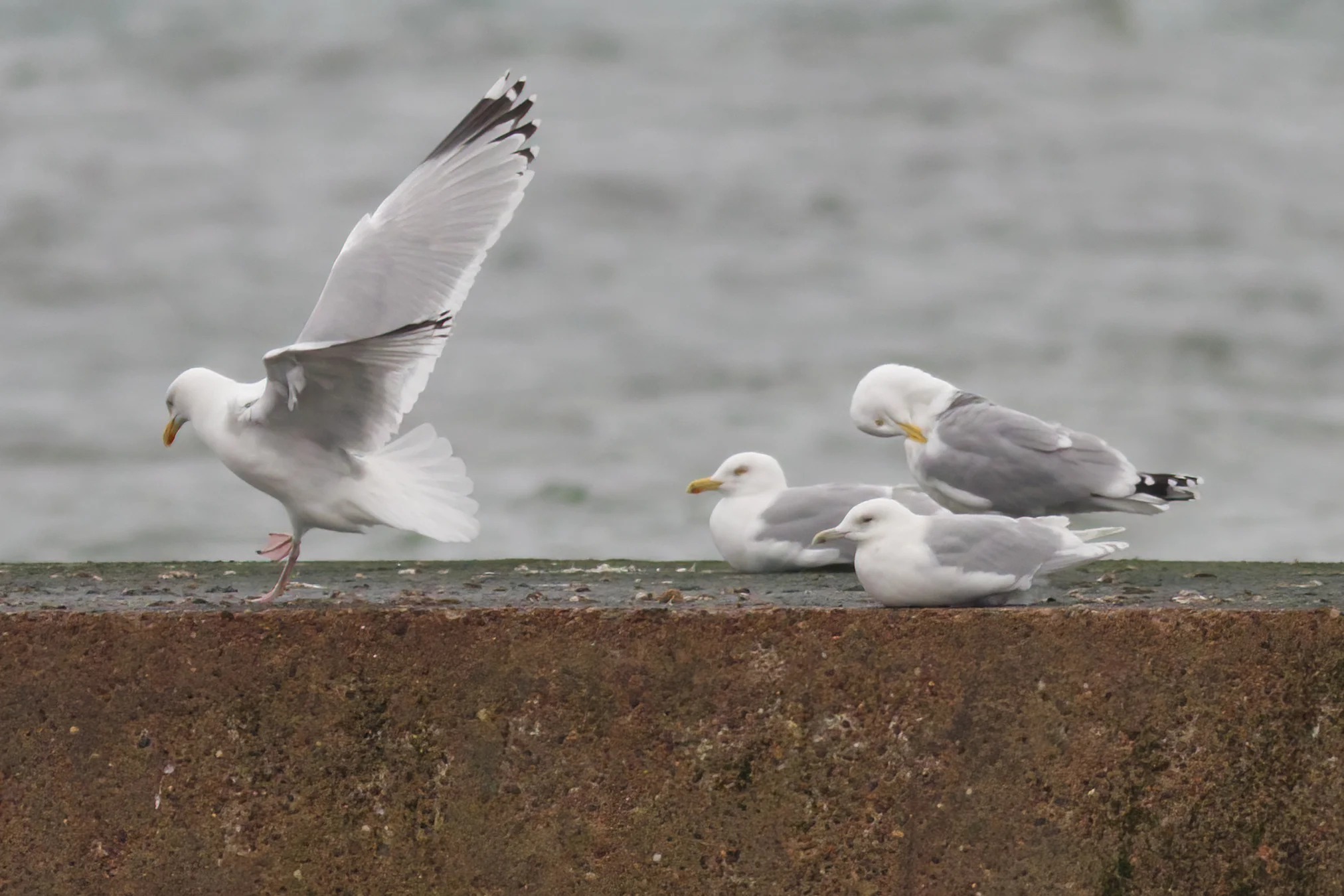
As another year draws to a close, 2024 brought several remarkable birding moments. I added four new species to my Cheshire & Wirral list, now standing at 299 species, and four new species to my BOU list, now totalling 539.
The year began on a high note with the long-awaited acknowledgement by the BBRC of Allan Conlin’s and my observation of a Barolo Shearwater off the North Wirral coast — an identification confirmed after 13 years.
Below are a few highlights from the year. Please click the links to view Richard Smith’s and my article:
Allan and I were all smiles after finally connecting with the Barolo Shearwater
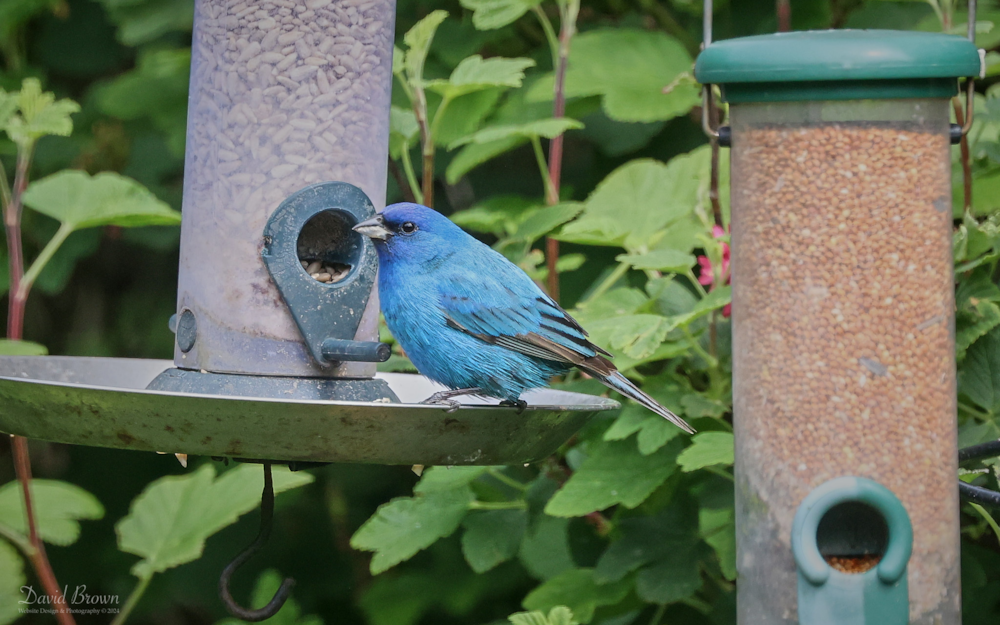
All was quiet in the birding world until 19 May, when an Indigo Bunting was discovered in Whitburn, County Durham. Having narrowly missed the St Agnes bird on the Scilly Isles in October 2020, this was my second chance. Two and a half hours later, after a brisk run, Peter kindly let Jenna and me into his house, where the Indigo was showing beautifully on his feeders. What a bird!
Indigo Bunting
While visiting friends in late May on my way down to Birmingham, news broke of a Roseate Tern at Marsh Lane Nature Reserve. The bird was showing well by the time I arrived on site.
I also visited Cambridgeshire, heading straight for Fens Drayton Lakes, where I tracked down the first-summer Red-footed Falcon perched atop a poplar. These are spectacular birds, and it was a real treat to catch up with this showy male. Fingers crossed, Cheshire gets one soon! 🙏
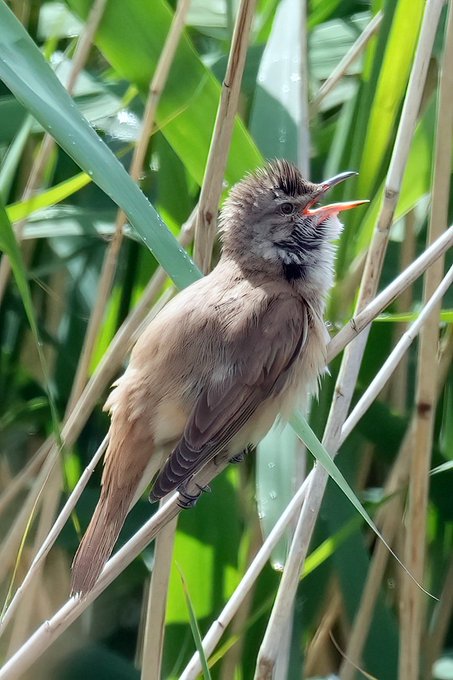
Next, I drove to Ouse Fen RSPB, where a short walk brought me to a singing Great Reed Warbler. It eventually showed really well — a treat, as I hadn’t seen one for years. I enjoyed sitting quietly, watching this beauty sing. To top it off, two Bitterns flew from the reed bed right in front of me, a spectacular sight.
After enjoying those great views, I drove home via Paxton Pits, where I was treated to stunning views of two Nightingales. A perfect way to round off a fantastic day of birding!
Early June was spent with friends in Oban. On the way up, I stopped at Inchinnan, Clyde, and managed to connect with a Stone Curlew that had been reported. Despite appalling weather on arrival, the bird showed really well.
This was the first record for Clyde since 1966
Other highlights from the week included Golden Eagle, White-tailed Eagle, two Ospreys, and a pair of Red-throated Divers on their breeding grounds.
On the way home, I stopped at Loch Turret Reservoir and enjoyed excellent views of a Ring-billed Gull.
On 6 July, news broke of a Caspian Tern at Sandbach Flashes. This was a new bird for me in Cheshire and Wirral, having missed the Acre Nook bird back in 2013 while on holiday.
Acre Nook bird
On 6 July, news arrived of a Caspian Tern at Sandbach Flashes. Finally connecting with this bird was a thrill, especially after missing the Acre Nook individual back in 2013 while I was away on holiday.
This was the 8th record for Cheshire and Wirral.
Previous records:
2013 Acre Nook Sand Quarry 24th-29th July
1994 Neumann's Flash and Marbury 12th June
1992 Neumann's Flash and Marbury 30th-31st May
1988 Neumann's Flash 26th June
1988 Northwich 8th May
1986 Hilbre Island 31st May
1967 Witton Flashes, Great Budworth and Marbury 2nd-4th July
While visiting friends in Norfolk in July, I stopped at Finningley in Nottinghamshire and managed to connect with a Black-winged Pratincole that had been present for the past couple of weeks.
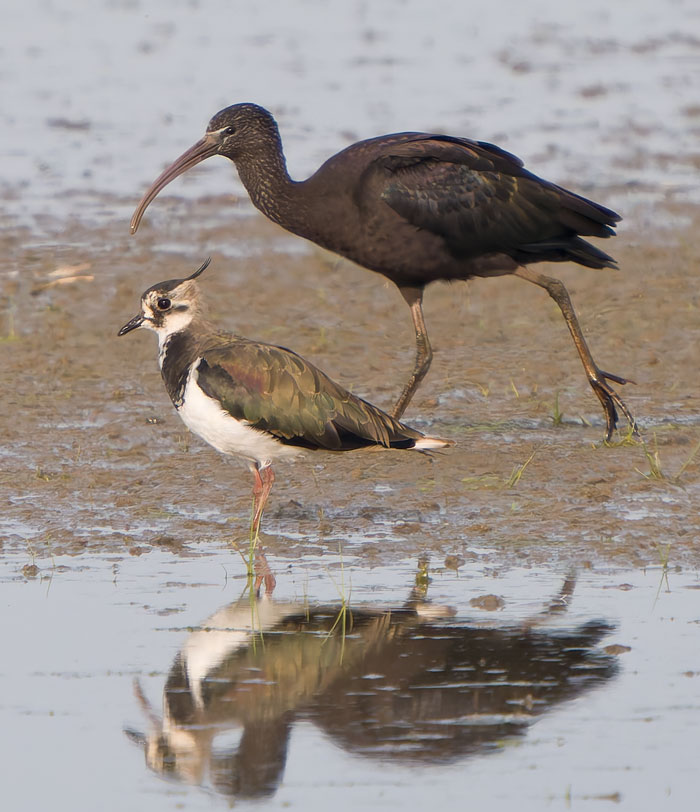
This was only the fourth Black-winged Pratincole I had seen in Britain, the last being on 4 May 2012 at Burton RSPB in Cheshire. Over the next few days, I added a Glossy Ibis at Cley to the year list.
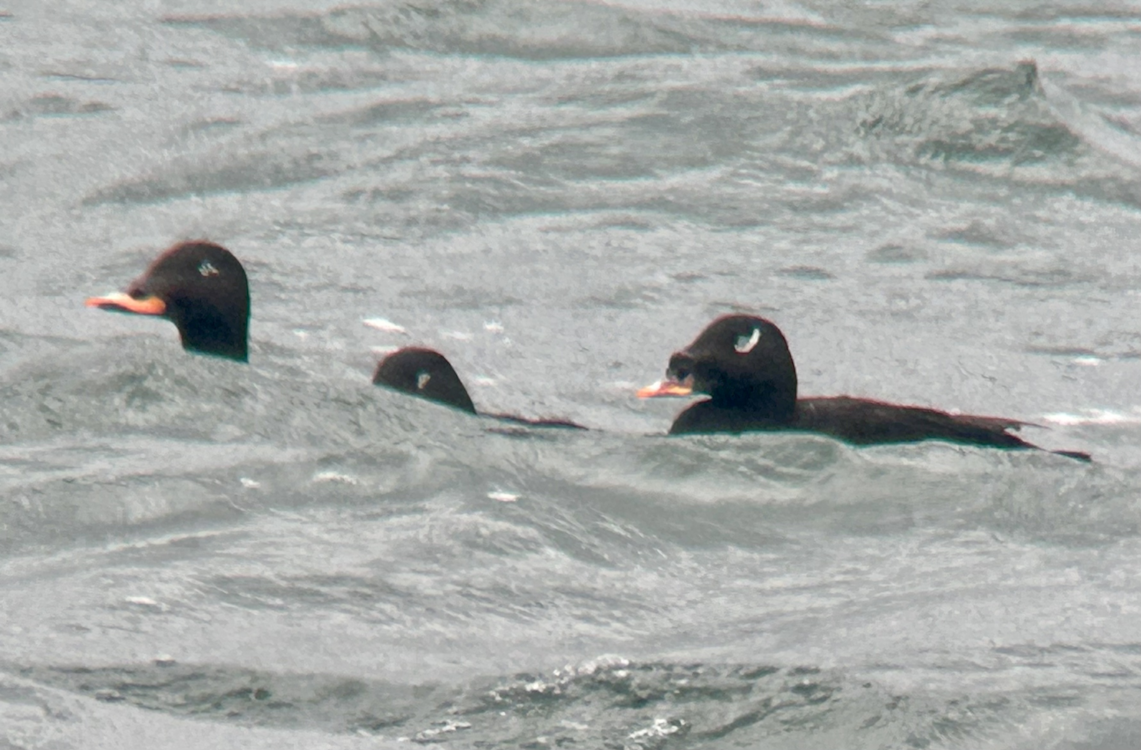
After spending the weekend in Edinburgh in late July, I stopped at Musselburgh Lagoons on the way home to try and catch up with the Stejneger’s Scoter. On arrival, a few birders were already on the bird, which was fortunate as I was pressed for time heading south. The Stejneger’s Scoter showed really well, alongside a few Velvet Scoters.
I had previously made the journey to see the Stejneger’s Scoter in December 2023; the sighting was accepted onto the British list. Click the link below to read more.
At the beginning of August, while exploring Norfolk with friends, we stopped at Snettisham RSPB to search for a White-rumped Sandpiper.
There were up to five White rumped sandpipers on the 5th on the North Norfolk coast, reported today, and three had been reported from this site.
As the tide came in and wader numbers in the Wash grew, a birder suddenly called out that he had found it.
I had only seen one previously, back in 2002 at St Mary’s Island, Tyne and Wear. This is a species long overdue for Cheshire and Wirral. I hadn’t visited Snettisham for a good ten years, so I spent the rest of the evening simply enjoying hundreds of waders in murmuration and watching the sun set over the Wash.
The following day, I visited Cromer, one of Britain’s premier locations for observing juvenile Caspian Gulls in late summer. Geographically, it makes perfect sense: situated on the north-eastern corner of one of England’s most easterly counties, Cromer lies directly opposite the coast of North Holland. It is ideally placed as a first landfall for juvenile Caspian Gulls dispersing westwards from mid-July, much as south-east England often receives the earliest Yellow-legged Gulls a few weeks earlier. For anyone with a serious interest in gulls, Cromer offers unrivalled opportunities to study Caspian Gulls at point-blank range.
With four birds reported on the beach throughout the week, I made the trip with my good friend Owen Parsons. It didn’t take long before we located our first juvenile Caspian Gull, calmly roosting on the sand.
While scanning through the juvenile Herring Gulls, a first-summer Caspian Gull suddenly appeared, perched on the rocks.
Moments later, another bird appeared on the beach directly in front of us.
I couldn’t believe how many Caspian Gulls were present. We managed to connect with six individuals — three first-summers and three juveniles — but, despite a thorough search of the area, the adult bird eluded us.
Owen was busy papping away, capturing close-up shots of the Caspian Gull.
A fantastic evening of birding was rounded off with a pint, watching the sun sink below the horizon.
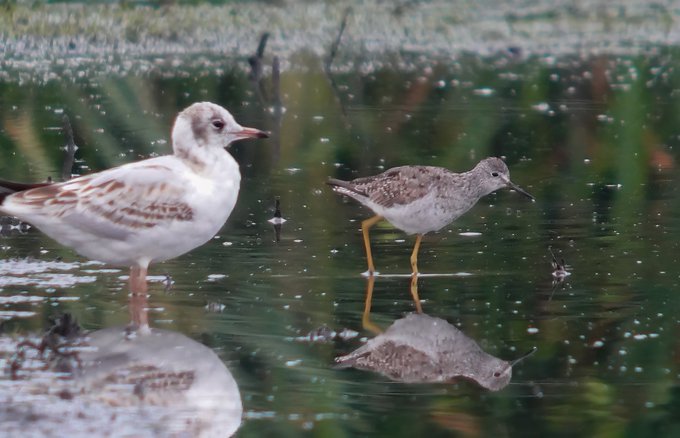
On 11th August, I stopped by Lilbourne Nature Reserve while passing through Northamptonshire and enjoyed excellent views of a Lesser Yellowlegs.
Apparently, the last record of this species in Northamptonshire was 29 years ago! Other birds on site were Pectoral sandpiper,2 Green sandpiper and 6 Yellow wagtails.
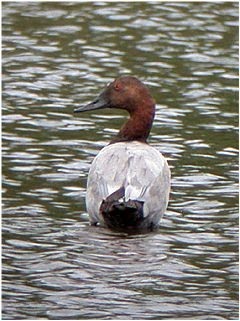
On the 14th August, whilst passing Abberton reservoir in Essex with my good friend Owen Parsons, news broke that a Canvasback was showing well on the causeway. Owen needed the bird for Britain, so we decided to give it a go.
I had previously seen the Pennington flash bird in 2002(See below)
Pennington Flash Bird 2002
On arrival, the bird was showing really well on the causeway.
Other birds of note on site included a Great White Egret and five Garganey. From there, we moved on to Dunwich Heath, where we connected with another target species that Owen had never seen before: the Dartford Warbler.
It wasn’t long before, as we walked on, the sharp alarm call of a Dartford Warbler cut through the heath. Elusive at first, the juvenile eventually betrayed its presence, perching boldly in the open and rewarding us with superb views.
A superb end to a cracking afternoon’s birding, capped perfectly by Owen adding two lifers to his list.
Late on the evening of the 18th, news broke that Colin Wells had found an absolute mega at Burton RSPB: a Hudsonian Godwit. I was away for the week, powerless to respond if it lingered. By 9:00 a.m. the next morning, updates began filtering through. At first, there was no sign—but then the dreaded happened: the mega alert sounded. It was still there. A first for Cheshire and Wirral, and a truly spectacular bird for the county, this was a rarity we see all too rarely. I had encountered one previously, down in Somerset back in 2015.
Initially, I decided not to go. Five hours from home was a big ask, and I tried to get on with my day. Thankfully, the bird flew soon after—something that would have made the decision far harder had I already been on the road. Later, news came that it had been seen earlier on Monday at Connah’s Quay reserve. For the rest of the week, birders scoured the area, but the godwit failed to reappear.
Fast forward to this morning. The bacon was under the grill when the mega alert went off again. It was back. Chaos followed as Jenna and I were out of the door and into the car within minutes. Fifteen minutes later, we were on site, racing to the Border Hide—and there it was, roosting right in front of us. The bird showed superbly, eventually opening its wings to reveal striking black underwings. What a bird—and what a comeback, after thinking it had gone for good.
The Hudsonian Godwit is slightly smaller than our regular Black-tailed Godwit and markedly darker in plumage, with a distinctive black underwing. A long-distance migrant, it breeds at remote sites in northern Canada and winters as far south as southern South America.
On 21 August, Owen and I stopped at a new site for us—Dickleburgh Moor in Suffolk. A Temminck’s Stint had been present for several days, and reports suggested that a Wood Sandpiper had also joined it on site.
Dickleburugh Moor
It didn’t take long to locate the Temminck’s Stint, which was foraging just a few metres from the footpath and showed exceptionally well.
A Wood Sandpiper also showed well on the opposite flood, accompanied by four Ruff and two Green Sandpipers, while a Hobby added excitement with a low, fast fly-past.
It was a lovely evening spent exploring the site, which proved to be a cracking place for birds.
27 August
On 27 August, Owen and I called in at Ouse Fen RSPB in Cambridgeshire, hoping to connect with a Black-winged Stilt that had been reported. We were already familiar with the reserve, having visited in May to see a Great Reed Warbler, and that knowledge gave us a clear idea of where to begin our search.
It didn’t take long before we located the Black-winged Stilt, feeding at the far end of Cell 10.
The Black-winged Stilt showed really well, though it was constantly on the move. A low-flying Marsh Harrier soon flushed it, sending the stilt to the far end of the marsh. Other birds of note on Cell 10 included a Wood Sandpiper, Greenshank, Ringed Plover, Great White Egret, and Eurasian Spoonbill.
On 9 September, having only ever seen four Purple Herons in Britain and being so close to the site, I called in and was fortunate to find the bird on show as soon as I arrived. Purple Herons are well overdue in Cheshire and Wirral; although we’ve had four records in twenty years, none have been twitchable, all flying off before being fully appreciated. This one, however, showed beautifully—a real treat.
Travelling to Norfolk on 12 September, I stopped at Wells Wood, where an Icterine Warbler had been reported. After parking, I bumped into James Hanlon, who had already seen the bird and kindly pointed me in the right direction. It didn’t take long before the warbler appeared, foraging through the trees with a Long-tailed Tit flock. I hadn’t seen an Icterine Warbler since 2022 in Shetland, so it was a real pleasure to reconnect with the species, and it performed brilliantly in the Norfolk afternoon sun.
(C) J Hanlon
Icterine Warbler
I had one good sighting of the bird before it became elusive, likely as the overcast weather closed in. Other birds of note in the same area included a Wood Warbler and two Spotted Flycatchers.
Wood Warbler
Spotted Flycatcher
Great afternoons of birding—and at last, autumn is upon us!
With five recent sightings of South Polar Skua off the Isles of Scilly, my good friend John Pegden organised three pelagic trips in the hope of connecting with this elusive species. Twelve of us finally agreed to go on 24 August.
I met up with Dan Pointon, Mark Sutton, and John Pegden, and we set off late in the morning. The journey was filled with optimism and lively conversation—better to be out at sea than sitting at home wondering what if! By late afternoon, we called in at Cape Cornwall, where we all enjoyed excellent views of a Melodious Warbler, only my fourth for Britain.
Melodious Warbler
 Cape Cornwall in the evening sun
After a long drive south, the evening was spent in Penzance, enjoying a well-earned meal at the local curry house.
We were all up at 6:30 a.m., making our way down to the quay in Penzance, where the dawn sun rose behind St Michael’s Mount, bathing the harbour in a golden glow.
The Scillionian
All ready for the Pelagics
The crossing over to the Isles of Scilly was productive, with five Cory’s Shearwaters, two Great Shearwaters, a juvenile Sabine’s Gull, and a Sooty Shearwater all seen along the way.
Here’s a summary of our sightings over the next few days:
Day 1 – Pelagic
14 miles SW of St Mary’s:170 Cory Shearwaters,10 Great Shearwaters,2 Great Skuas,12 European Storm Petrels and 250+ Short-Beaked Common Dolphins
Heading out of St Mary's
Great Shearwaters breed on Nightingale Island, Inaccessible Island, Tristan da Cunha, and Gough Island. Remarkably, they are one of the few bird species to migrate from breeding grounds in the Southern Hemisphere all the way to the Northern Hemisphere.
No South Polar Skua this evening as we passed Bishop Rock Lighthouse on the way back—but there’s always tomorrow.
Day 2 – Pelagic
This morning, Dan, Neil, and I spent some time exploring St Mary’s. Highlights included two Great White Egrets and a pair of Common Rosefinches.
Dan and Neil
Dan found two Common Rosefinches by St Mary's airport, which showed well. We left St Mary's at 1pm for the next Pelagic.
Adrian Webb, making sure the pelagic trip was fuelled up with provisions from the local Co-op.
At sea, various locations:15 Great Shearwaters, Sooty Shearwater,2 European Storm Petrels,4 Great Skuas and a Balearic Shearwater.
Great Skua
Coming back into St Mary's
The evening was spent catching up with my mate Higgo, who lives on the islands, sharing a few beers and swapping stories.
Day 3 Pelagic
Wolf Lighthouse and return: 2 Juvenile Sabine's Gull, Arctic Skua,80 Cory’s Shearwater,20 Great Shearwater, Shearwater, Balearic Shearwater,3 European Storm Petrel, 40 Short-Beaked Common Dolphin.
Wolf Lighthouse
Juvenile Sabine’s Gulls breed in the Arctic and migrate south to the Southern Hemisphere each autumn, covering up to 24,000 miles per year—the longest migration of any gull.
After three days of pelagics, we headed home without a sighting of the South Polar Skua. However, there was a spectacular feeding flock of over 300 large shearwaters just west of the Wolf, seemingly an even split between Cory’s and Great Shearwaters, spotted from the Scillonian on the journey back to Penzance
Pelagics are already booked for next year—we’ll be back!
28 September
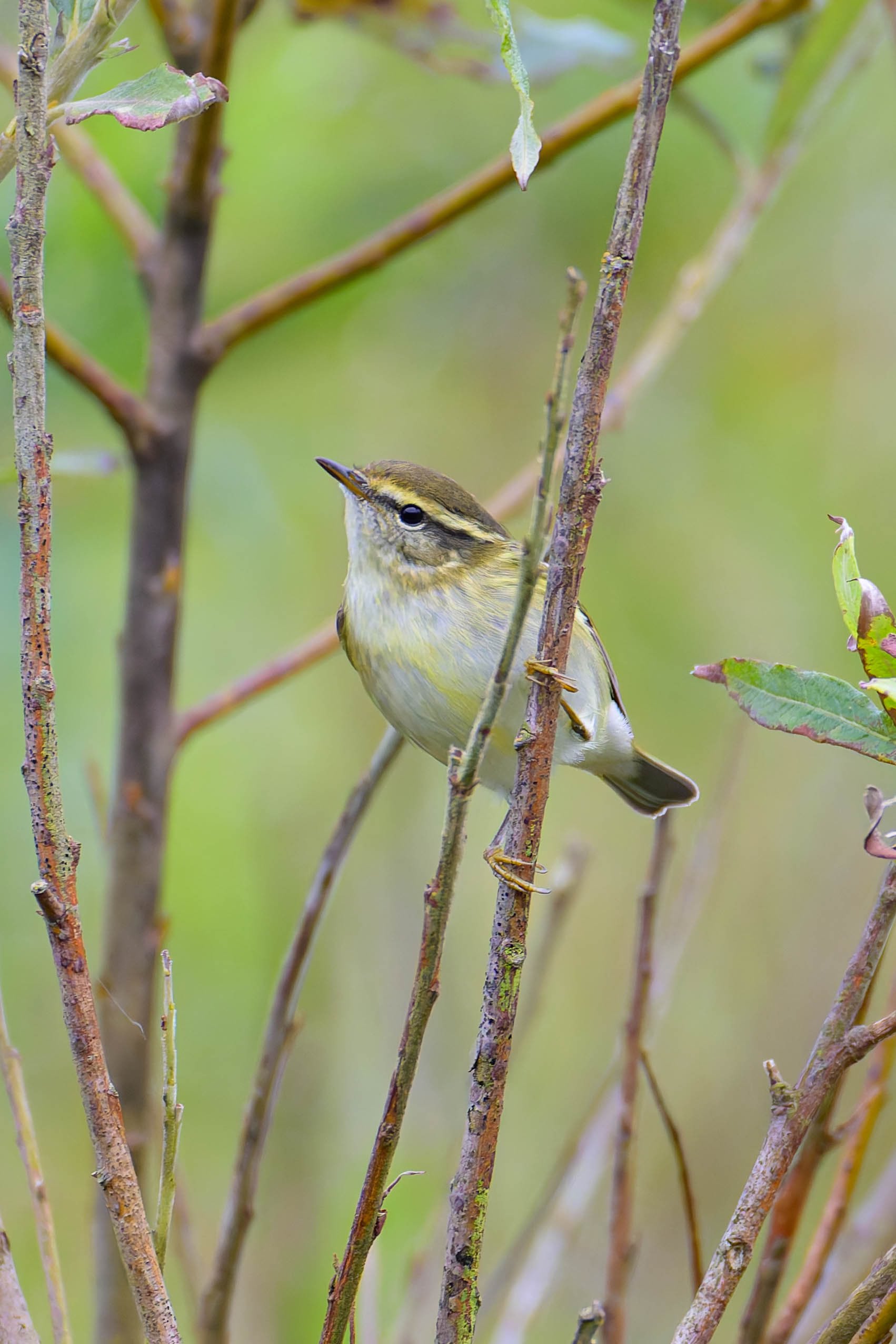
An elusive phyllosc had been present at Bempton Cliffs RSPB in East Yorkshire since Wednesday. Initially thought to be an Arctic Warbler, the bird was later considered a “possible” Eastern Crowned Warbler. After some diligent work by a local birder, including recordings, it was finally identified as a Pale-Legged Leaf Warbler.
News of the identification came too late for an immediate trip, so we planned an early start. Owen, Jenna, and I set off at 5:30 a.m., arriving just before 9:00 a.m. to join the growing crowd. Peering into the low vegetation with everyone else, it was clear this was going to be tricky. The bird appeared briefly, moving further along the hedge, then flew up to a tree before disappearing into the Dell. We hurried to the nearest vantage point and waited—and finally, the Pale-Legged Leaf Warbler showed really well, rewarding the patience of all those watching.
This was the first live record of the Pale-legged leaf warbler for the Western Palearctic.
What a bird! On the way back home, we called in at Stamford Bridge, where a Hoopoe was showing well in someone's front garden.
I set my alarm early on 4 October for my annual pilgrimage to Shetland. I wanted to fit in some birding around Aberdeen before catching the ferry to Lerwick. Leaving the Wirral at 4:00 a.m., I made good progress north and arrived at Cameron Reservoir in Fife just after 11:30 a.m., hoping to see a Spotted Sandpiper that had been present for the past couple of days. The juvenile showed well on arrival at the north end of the dam, making a fine addition to my Scottish list.
Spotted Sandpiper
Cameron Reservoir
Next, I called in at the Montrose Basin in Angus, where a good variety of bird species were on show. My main target was a Kingfisher for my Scottish list, and it didn’t take long to spot one perched low in the willows.
A good afternoon birding before meeting up with John Pegden and Neil Bostock on the boat to Lerwick.
Leaving Aberdeen on the overnight ferry to Lerwick
I arrived at Lerwick with John Pegden and Neil Bostock just after 7.30am and picked up the hire car for the weekend, heading straight to Clickimin Loch just outside of Lerwick, where we got great views of a Barred warbler.
Further down the road, we had good views of a Little Bunting.
News then came through that a Paddyfield Warbler had been found on Unst. We picked up Dan Pointon, who was already on the island waiting for us, and set off immediately. After a tense hour of brief glimpses of the bird foraging low, the Paddyfield Warbler finally showed properly.
Paddyfield twitch
A Lanceolated warbler was also present at the bottom of the field, which showed really well. The bird had been present for the last few days and was my 5th for Shetland.
What a beauty!
A Common Rosefinch was also present on site.
A great first day on Shetland. The evening was spent eating good food, a few whiskies and a good catch-up at our accommodation, where we were staying at Sumburgh lighthouse.
Sumburgh Lighthouse, where we are staying
Shetland team 2024
Today was spent at the south end of the mainland, where we connected with eleven Yellow-browed warblers and a Red-breasted flycatcher. A quiet day, really, but we put the miles and steps in.
Red-breasted Flycatcher
Migrants were scarce, but we did have sightings of Blackcap, Lesser Whitethroat.
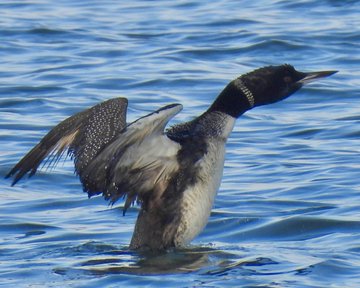
2 Great northern divers were also seen at Scousburgh.
This morning was spent again around the south of the mainland at Sumburgh and Grutness, which was very quiet again; two Blackcaps were seen and 4 Yellow-browed warblers. News broke late morning that a Pallas's grasshopper warbler had been found at Garth further north, so we headed there. The bird eventually showed really well, and this was my third for Britain. The bird didn't let us down and performed well for the crowd, sitting up at times in the low vegetation.
After cracking views of the bird, we made our way to Kergord, where we connected with an Olive-backed pipit, which showed really well. The bird was foraging in low vegetation, and then it flew up into a tree.
The wind had clearly changed by late afternoon and gone from a south-easterly to a westerly. News came out just before dusk that an Arctic warbler was showing well south of Lerwick, so we headed there and got great views.
Another great day's birding on Shetland!
This morning was spent around the west side of the mainland. Few migrant birds were seen after a full day's birding,6 Blackcaps,8 Yellow-browed Warblers and a Siberian Chiffchaff.
Siberian Chiffchaff
The wind has really picked up this afternoon, which has made finding birds very challenging, but before dusk, we connected with a returning Juvenile White Fronted Goose at Loch of Spiggie with some Pink-footed Geese.
Spent this morning in the accommodation as I was having a Microsoft Teams interview online, so the other lads headed out. During my interview, news broke that a Common Nighthawk had been flushed by the side of the road on the island of Yell. Panic set in as I needed this for Britain, so after my interview, I headed down to the airport to rent a car for the day and headed north. As I arrived at the ferry terminal at Toft, news broke that the bird was a Nightjar! Unbelievable. Earlier in the day, a Pallas's Warbler had been found, so I headed there and got great views of the bird.
Pallas's Leaf Warbler
The weather was dreadful today, with a strong northerly wind and torrential rain. News broke that a Bluethroat had been found at Channerwick, so we headed there and got good views.
The afternoon was spent birding from the car due to the weather, but we did manage to see a Lapland Bunting by the side of the road, which did show really well.
The weather eventually improved by the evening, and we were all treated to amazing views of the Northern lights.
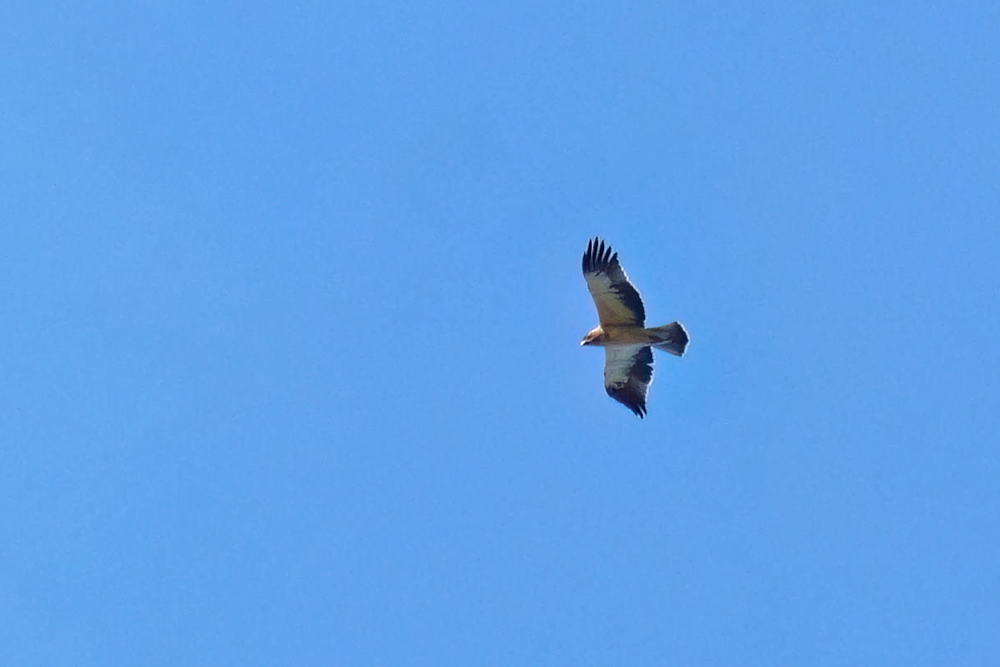
Waking up this morning, a pale-morph juvenile Booted Eagle over Nanquidno in Cornwall had been seen yesterday.
Booted Eagle (Jim Waterman)
After dark morphs over Cape Cornwall on the 20th May and Nanquidno on the 2nd September, both would fail to be seen again. Dan Pointon and I were up for leaving Shetland today if the bird was seen again, so we carried on with our day.
A Cattle Egret was seen during the morning, with two Purple sandpipers, which all showed well.
Cattle Egret
Late on the morning of our departure, news came through that the Booted Eagle had been relocated by some local birders, showing intermittently around Land’s End until a final sighting at 1:45 p.m. We booked our flights for a late-afternoon return to the mainland but felt we had to give it a go, even though there were no recent sightings.
We headed back to our accommodation to pack, and just as we were leaving, word came that a White-winged Scoter had been found north of Lerwick. A quick drive north soon put us on the bird, which was showing alongside a group of Eiders.
White Winged Scoter
After enjoying excellent views of the White-winged Scoter, we headed for the airport, marking the end of a fantastic week of birding on Shetland.
11 October
Having left Shetland the previous afternoon with news that the Booted Eagle was still in the area, Dan Pointon and I headed south, picking up Owen Parsons from Cheshire on the way. We drove through the night and arrived on site just before 8:00 a.m., securing a good vantage point in case the bird was still present.
We waited all day, but the Booted Eagle never appeared. Plenty of other raptors kept us entertained, including Buzzards, a Red Kite, a Marsh Harrier, and a Merlin. Large shearwaters passed by in good numbers, and Cory’s and Manx Shearwaters were seen at Pendeen before dusk.
This was the third record of the species in Cornwall this year, but none had lingered. The Booted Eagle has a controversial history in Britain and Ireland. A pale-morph immature that toured Britain and Ireland in 1999–2000 is currently placed in Category D—a holding category for species where there is reasonable doubt that the birds occurred naturally—due to anomalies in arrival date, duration of stay, plumage, and the largely unfounded suggestion that the species is unlikely to cross large bodies of water.
We decided to stay overnight in Penzance, hoping the bird might reappear the next day. By lunchtime, however, we gave up the search and headed to the Lizard, where we enjoyed excellent views of a juvenile Rose-Coloured Starling.
Back down the road at Helston, two Firecrests were seen, and a Mediterranean gull was on the boating lake.
With still no news of the Booted Eagle, we began the long journey back north, calling in at Dawlish Warren along the way. There, we connected with a male, a female, and two juvenile Cirl Buntings. I hadn’t seen one of these for years, and we enjoyed excellent views as they fed on the golf course.
Dan and Owen, photographing the Cirls
As dusk fell, we headed home. No Booted Eagle this time—but there will be another! 😎
2 November
News broke this morning that a dark-morph Booted Eagle had been seen two days ago during a volunteer work party by Alan Lewis, and it had been refound a few miles away by Chris Heard. It was too late to travel down that day, so I arranged to meet Dan Pointon the following morning.
Having missed the pale-morph Booted Eagle in Cornwall a few weeks ago, I was hoping this bird would still be around. I met Dan just after 7:00 a.m., and we drove to the east of Warburg NR, where the Booted Eagle had originally been found. Alan Lewis, the finder, was already on site. A good number of Red Kites and Common Buzzards were present, but little else.
Red Kites were loafing in the fields.
Next, we headed towards Remenham Hill and pulled up in a layby overlooking the area where the bird had been seen the previous day. Red Kites were everywhere—by 9:00 a.m., we had already counted over seventy. Just after 9:30 a.m., while scanning north towards Remenham Hill, Dan suddenly called out, “I’ve got it!”
I managed to pick it up, too, but the Booted Eagle was constantly being mobbed by Red Kites. As Dan rang the bird to other arriving birders, it dropped down into the woodland. Ash Howe, Simon King, and James Hanlon soon joined us—they were only a short distance away—and it wasn’t long before the Booted Eagle re-emerged, heading towards us while being harassed by Corvids.
Booted Eagle (C)Simon King
We all enjoyed fantastic views of the Booted Eagle before it eventually drifted back towards the hillside and disappeared once more. What a bird! We were incredibly fortunate that it flew so close to us.
Afterwards, we crossed to the other side of the Thames in an attempt to catch more views, but the eagle was picked up flying east over Henley, giving us only distant scope views.
Birders on site
6th Nov
I sat at home this morning when the news came out that county recorder Jane Turner had caught a Barred warbler in her garden at Hoylake. Jane put on the local WhatsApp bird group that the bird would be released in an hour, so I made my way up to Jane's house.
Jane's seafront garden
Jane soon appeared from her garden with the bird in hand. A great bird for Cheshire and Wirral, and a county tick for me, having spent hours looking for the Burton bird last year.
11th Nov
News broke yesterday that a Penduline Tit had been found at Woolston Eyes in Warrington, but family commitments meant I’d have to wait until the following morning. Early reports confirmed the bird was still present, so I headed over with Owen Parsons. On arrival, the tit hadn’t been seen for over an hour—but we didn’t have to wait long before it was refound in the east corner of the reserve.
Woolston Eyes Number 4 Bed
The Penduline Tit was found feeding on typha and showed well eventually.
(C) Dan Owen
Birders On Site
This was Cheshire and Wirral's third record after one was found at Woolston Eyes in 2022. What a week, Barred Warbler and Penduline Tit for the Cheshire life list!
Previous Records
Meols-Wirral-14th September 1986
Woolston Eyes-Warrington-12th November 2022-Refound on the 22nd -23rd November 2022
13th Nov
Late on Sunday, news emerged after a homeowner photographed a strange yellow-and-black bird on their washing line, and the images were shared on Facebook.
The bird turned out to be a first-winter male Scarlet Tanager, and it emerged that it had been present since the start of the week. Reports soon pinpointed its location to a place called Shelf in West Yorkshire.
I was at work on Monday, so I had to wait until Tuesday to visit the site. That Monday morning, while working, news came through that the Scarlet Tanager had been refound. It remained present all day, and the WhatsApp groups were buzzing with photographs—keeping me on tenterhooks!
Back in 2011, I had left the Isles of Scilly while on holiday to chase a Scarlet Tanager in Cornwall, only for the bird not to be there and to reappear the next day back on the Isles of Scilly. This species had already proven to be a proper runaround!
St Levan, Cornwall, first-winter male,20th to 21st October 2011
Isles of Scilly, Sandy Lane, St Mary's,first-winter male,22nd October 2011
Anyway, what I wasn't expecting was the sheer number of birders on site for this bird on a Tuesday morning when I arrived, after apparently 400 people had been on site yesterday. Does nobody work anymore?
7.15am in the morning!
The main area where the bird had been seen yesterday
This was going to be a nightmare, and so it proved when the bird was seen further down the road in a tree, briefly just before 8.00am by a few birders. Everybody surged forward, but the bird had gone straight through. The bird was seen again just before 9.00am down the side of a house, where the bird perched up in a cherry tree for a few seconds. Again, you had to be in the right place to see the bird due to the size of the crowd.
Birders On Site
The rest of the day was uneventful, with no sightings of the bird before dusk. I was still hopeful the bird was around, so I headed home and decided I would come back in the morning, and hopefully the crowds would be gone! A few phone calls and texts had me laughing during the evening, as I had been seen on the regional news and even made the ITV news at 10.00!
I arrived back on site at 7.00am, and thankfully, there were only a few people on site, but again, there was no sign of the bird by 9.00am, so I teamed up with the remaining birders and did some door knocking on the top road looking down on the area I had been looking up at yesterday. Thankfully, a lovely lady called Mavis let us into her garden, and we were in a prime position if the bird showed again.
Mavis's garden overlooked the area where the Scarlet Tanager had been regularly seen over the last week, after talking to a few of Mavis's neighbours.
We waited and waited, hopeful that the bird would return and as birders decided to leave, due to Sparrowhawk theories and that it had gone, I decided to give it till dusk; there were only eight of us left! At 2.30pm, I was walking down the garden when Dave Woodhouse shouted, "Al, it's in the tree" Unbelievable, after 15 and a half hours of standing around, I was actually now watching this MEGA YANK! No pushing, No Scrum, just eight of us watching this bird in total silence, taking it all in!AMAZING!
First photographs of the Scarlet Tanager
The Tanager continued to show well, and the birders who had left started to return to get crippling views of the bird.
Dave Woodhouse and I, Dave had been on site since yesterday morning as well! Dedication and patience had finally paid off!
IMAGES AND VIDEO OF THE SCARLET TANAGER!
9th Nov
I've spent the last few days in the county of Caithness up in Scotland and saw some good birds on my travels. On the way up north, I called in at Newshot Island in Clyde, where I connected with an American Wigeon, which I needed for my Scottish life list.
American Wigeon
Staying in Thurso, a good selection of birds was seen.
Thurso Harbour and beach
Long-Tailed Duck
Sanderling
Ringed Plover
Wigeon
Other birds of note were Black Guillemot, Eider and Red-throated Diver. I visited Broubster Leans RSPB whilst in Caithness, which was a new site for me, where I saw good numbers of wintering Whooper swans and Greenland white fronted geese.
 Broubster Leans RSPB
Greenland White Fronted Goose
Whooper Swan
On the way home, I called in at a few sites where I saw some good birds and added another Scottish lifer to my life list.
Kumlien's gull at Helmsdale-Highland
Loch Fleet-Highland
Green-winged Teal- A new bird for my Scottish life list
Dornoch beach-Highland
Surf Scoter
2 Surf Scoters were seen with a flock of 600 Common Scoters, Slavonian Grebe and a Red-throated Diver
A great few days away birding!
12th Dec
I visited East Chevington today after my friend Owen Parsons asked if I’d like to join him, as he needed Grey-headed Lapwing and had missed the bird in 2023. We spent the day on site without success, but a seawatch provided some compensation, with good views of Common and Velvet Scoter, two Surf Scoters, and a Black-throated Diver.
Surf Scoter
Other birds of note were
Russian White Fronted Goose
Kingfisher
28th Dec
News broke on Christmas Eve that a Yellow Warbler had been found in Kent—of all days. I briefly toyed with the idea of going, but with too many family commitments looming, Boxing Day was out of the question. When the bird was reported still present on Christmas Day, the decision was made for me, and I headed down to Kent for first light the following morning, hopes high that this time the timing would finally be right.
Birders On Site
On arrival, the bird showed only briefly on two occasions, and although I heard it call a couple of times from the far side of the stream, I was standing in entirely the wrong place. What followed was a frustrating three-hour wait with no further sign of the warbler, though a confiding Firecrest showed superbly and did its best to keep the assembled crowd entertained.
After the long wait, the tension was finally broken when a birder called out that he had the bird. Moments later, the Yellow Warbler flew up into its favoured alder trees and, as if aware of its audience, put on a top-class performance for the assembled masses.
After years of near misses, it finally came together. I’d dipped the Portland, Dorset bird in 2017 by a single day, then endured the familiar sting again in 2023 when one appeared in Shetland the day after my holiday ended. This time, though, there was no escape: at last I caught up with this little stunner, and the sense of release was immense. Set against a remarkable couple of weeks for Nearctic vagrants, it felt even more special—gripped back not only by the warbler but also by an unforgettable Scarlet Tanager. Taken together, they crowned what has already been an extraordinary year, the sort that reminds you why you keep going back out, scanning every hedge and treeline, convinced that anything might turn up.














 Cape Cornwall in the evening sun


.jpeg)
.jpeg)







 Broubster Leans RSPB